Have you ever wondered how long your cat can comfortably stay in a carrier? Whether you’re planning a short trip to the vet or a longer journey, knowing the right amount of time can make all the difference for your furry friend’s comfort and safety.
You’ll discover key tips to keep your cat calm and happy while in the carrier, and learn exactly how long is too long. Keep reading—you and your cat deserve the best travel experience possible.
Cat Carrier Time Limits
Keeping a cat in a carrier requires careful attention to time limits. Cats do not enjoy long stays in carriers. They may feel trapped and stressed. Knowing how long a cat can stay in a carrier is important for their safety and comfort.
Time limits depend on the trip length and the cat’s behavior. Short trips need less preparation and shorter times. Long trips need more care and breaks. Watch your cat closely to avoid stress or harm.
Short Trips Vs Long Trips
Short trips usually last under an hour. Cats can stay calm for this time if the carrier is cozy. Use soft bedding and a familiar blanket. Keep the carrier in a quiet, stable place in the car.
Long trips take several hours or more. Cats need breaks to stretch and drink water. Avoid leaving cats in carriers for more than two hours without a break. Plan stops to check on your cat and offer food or water if needed.
Signs Of Stress In Cats
Watch for signs that your cat is stressed in the carrier. Meowing loudly or crying shows discomfort. Pacing or scratching inside the carrier means anxiety. Heavy breathing or panting can signal fear.
Other signs include drooling and hiding in the corner. A stressed cat may refuse food and water. If you see these signs, stop and comfort your cat. Give breaks and try to make the carrier more inviting.
Credit: catfriendly.com
Preparing Your Cat For The Carrier
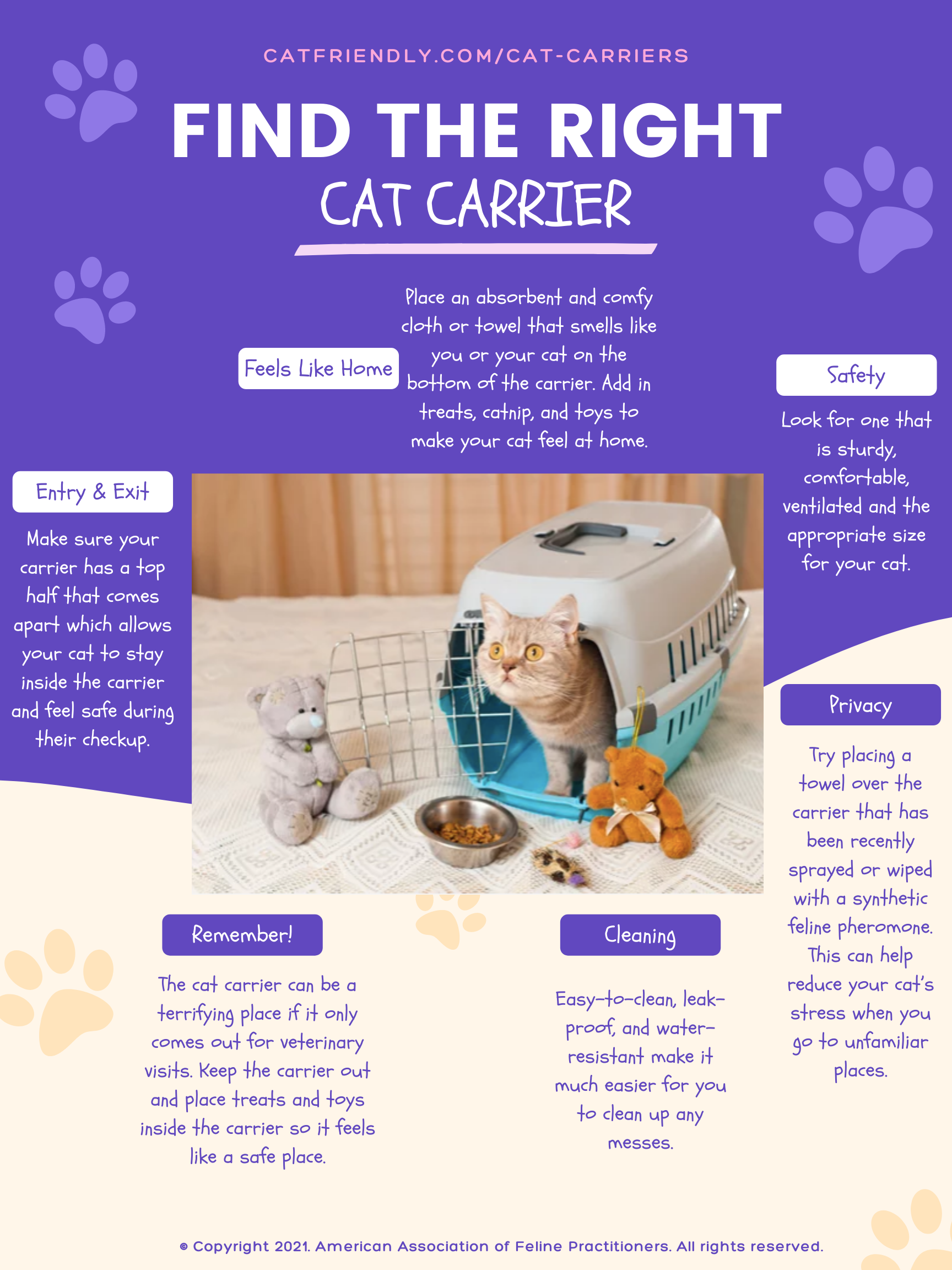
Preparing your cat for the carrier is key to a smooth trip. Cats often feel scared or stressed in carriers. Making the carrier a familiar, safe space helps reduce their anxiety. Start the preparation well before travel day. This way, your cat can get used to the carrier slowly. Patience and gentle steps make all the difference.
Familiarizing The Carrier
Place the carrier in a quiet room at home. Leave the door open so your cat can explore it freely. Add soft bedding inside to invite your cat to rest there. Let your cat go inside and outside on their own terms. Avoid forcing them in. Give treats near and inside the carrier. This builds a positive link with the carrier’s presence. Repeat this daily for several days.
Comfort Items Inside
Put familiar items inside the carrier. A small blanket or towel with your cat’s scent works well. Add a favorite toy to keep them calm. You can also include a piece of your clothing with your scent. These items help your cat feel safe and less alone. Avoid new or strong-smelling items that might scare your cat.
Carrier Safety Tips
Keeping your cat safe in a carrier is very important. A carrier must be comfortable and secure. This helps your cat feel calm and reduces stress. Here are some key safety tips to follow.
Proper Ventilation
Good airflow inside the carrier keeps your cat cool and relaxed. Make sure the carrier has enough openings for fresh air. Avoid covering the carrier with blankets that block air. Check that all vents are clear before travel. Poor ventilation can cause your cat to feel hot and uneasy.
Secure Placement
Place the carrier on a stable surface during travel. This stops it from sliding or tipping over. Use a seatbelt or secure strap to hold the carrier in place. Avoid putting it where it can fall or be thrown around. A steady position helps your cat stay calm and safe on the move.
Managing Long Stays
Managing long stays in a cat carrier needs careful planning. Cats can get stressed or restless in small spaces. Comfort and safety are important for their well-being. This section covers how to handle long trips or waits in a carrier. Simple steps help keep your cat calm and healthy during long stays.
Scheduled Breaks
Plan regular breaks during long trips. Stop every two to three hours if possible. Let your cat out in a quiet, safe area. Use a harness or leash to prevent escapes. Short breaks reduce stress and give your cat a chance to stretch. Avoid busy or noisy places during breaks.
Feeding And Hydration
Keep your cat hydrated during long stays. Offer small amounts of water often. Use a spill-proof bowl inside the carrier if possible. Feed your cat light meals every few hours. Avoid heavy or new foods to prevent upset stomach. Proper feeding and hydration keep your cat healthy and comfortable.
Choosing The Right Carrier
Choosing the right carrier is very important for your cat’s comfort and safety. A good carrier makes travel less stressful. It also helps your cat feel secure during trips. Picking a carrier with the right size, design, and material ensures a better experience. Your cat will stay calm and relaxed inside.
Size And Design
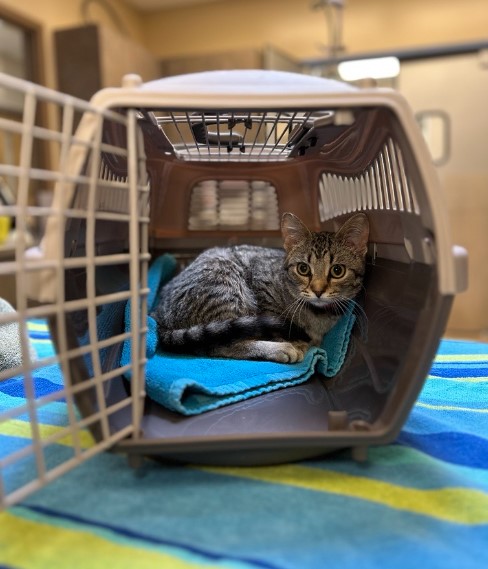
The carrier must fit your cat comfortably. It should be large enough for your cat to stand, turn, and lie down. A tight space causes stress and discomfort. Look for a carrier with good ventilation. Proper airflow keeps your cat cool and calm.
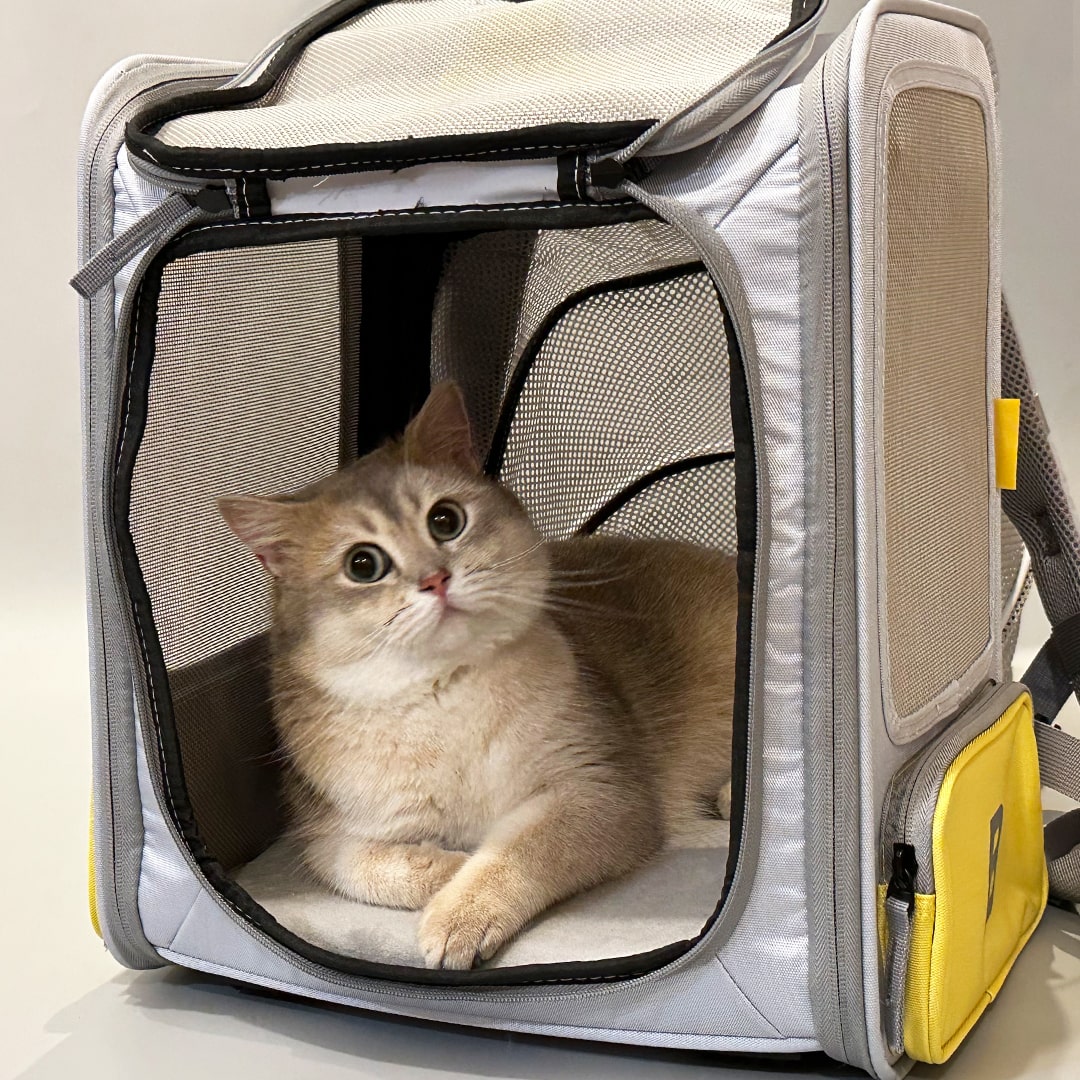
Design matters too. A top-loading carrier makes placing your cat inside easier. Side openings help during quick checks. Lightweight carriers are easier to carry. Handles and shoulder straps add convenience for you.
Material Considerations
Choose a carrier made of sturdy materials. Hard plastic or strong fabric carriers last longer. They protect your cat during travel. Soft-sided carriers offer flexibility and comfort. They are easy to store and carry.
Easy-to-clean materials save time. Spills and accidents happen. Waterproof or wipe-clean surfaces help keep the carrier fresh. Avoid carriers with sharp edges or loose parts. Safety is the top priority for your cat.
Credit: www.wihumane.org
Emergency Situations
Emergency situations can make keeping a cat in a carrier necessary but stressful. A cat may need to stay inside longer than usual during travel delays, sudden weather changes, or health problems. Understanding how to handle these moments helps keep your cat safe and calm.
Signs Your Cat Needs Help
Watch for rapid breathing or panting. These signs show your cat may be stressed or overheating. If your cat meows loudly or scratches the carrier, it could mean discomfort or fear. Look for drooling or vomiting as signs of illness. A cat that stays very still or seems weak needs immediate attention.
Quick Response Tips
Open the carrier door in a safe place. Offer water to keep your cat hydrated. Move your cat to a cooler spot if it looks hot. Speak softly to calm your cat. Call a vet if your cat shows serious signs like difficulty breathing or collapse. Act fast but stay calm to help your cat feel secure.
Credit: missymomo.com
Frequently Asked Questions
How Long Can A Cat Stay In A Carrier Comfortably?
Cats can stay in a carrier for up to 2 hours with breaks for food and water.
What Signs Show A Cat Is Stressed In A Carrier?
Look for heavy breathing, meowing, restlessness, or trying to escape as stress signs.
How To Make A Cat’s Carrier Time Less Stressful?
Use soft bedding, familiar scents, and keep the carrier covered for calmness.
Is It Safe For A Cat To Stay Overnight In A Carrier?
Overnight stays are not safe; cats need food, water, and a litter break.
Can Cats Eat Or Drink Inside A Carrier?
Cats can drink water in the carrier but feeding should be done outside.
How Often Should I Let My Cat Out Of The Carrier?
Let your cat out every 1 to 2 hours to stretch and use the litter.
Conclusion
Cats should not stay in carriers for too long. Short trips keep them calm and safe. Always provide water and breaks on long journeys. Watch your cat’s behavior for signs of stress. Choose a carrier that fits your cat well.
Comfort and security matter most during travel. Proper planning helps make trips easier for both. Keep your cat happy and healthy while traveling. Remember, brief carrier time is best for your cat’s well-being.
As an Amazon Associate, I earn from qualifying purchases.