Is your carpet looking like a battle zone thanks to your cat’s claws? You’re not alone.
Cats love to scratch, but when they turn your carpet into their personal scratching post, it can be frustrating. The good news? You can stop this behavior and protect your floors without stressing your furry friend. You’ll discover simple, effective ways to keep your cat from clawing the carpet—so you can enjoy a beautiful home and a happy pet.
Keep reading to find out how to make your carpet off-limits and redirect your cat’s scratching instincts in a way that works for both of you.
Credit: www.feliway.co.uk
Why Cats Claw Carpets
Cats scratching carpets can be frustrating for pet owners. Understanding why cats claw carpets helps manage this behavior better. Cats have natural needs and feelings that lead them to scratch.
Natural Scratching Instinct
Scratching is a natural behavior for cats. It helps them keep their claws sharp and healthy. Cats also stretch their muscles while scratching. This instinct is strong and cannot be ignored.
Marking Territory
Cats use scratching to mark their space. Their paws leave visible marks and scent. This tells other animals that the area belongs to them. Carpets are easy surfaces for cats to mark.
Stress And Anxiety
Stress can make cats scratch more than usual. Changes in the home or routine may cause anxiety. Scratching becomes a way for cats to feel better. It helps them release nervous energy.
Identifying Problem Areas
Stopping a cat from clawing the carpet starts with finding where the problem is. Cats choose certain spots to scratch for many reasons. Knowing these areas helps you protect your carpet better.
Paying close attention to your home and your cat’s actions makes a big difference. This section helps you spot the trouble spots and understand why your cat scratches there.
Common Carpet Damage Spots
Cats often scratch near doors and windows. These places let them mark their territory. Carpet edges and corners also get damaged a lot. Cats like to dig their claws into these areas.
Look for loose fibers and worn patches. These signs show where your cat scratches most. High-traffic areas can have more damage because cats feel safe there. Check under furniture and near cat beds too.
Observing Cat Behavior
Watch your cat carefully. Notice where it spends time and scratches. Cats use scratching to stretch muscles and keep claws sharp. They also scratch to leave scent marks.
See if your cat scratches after waking up or playing. This helps you find patterns. Understanding your cat’s habits helps you guide them to scratch in better places.
Protecting Your Carpet
Protecting your carpet is important to keep your home clean and your cat happy. Cats naturally scratch to keep their claws sharp and mark their space. Stopping them from clawing the carpet needs smart solutions. Using simple tools and tricks can save your carpet from damage.
Using Carpet Protectors
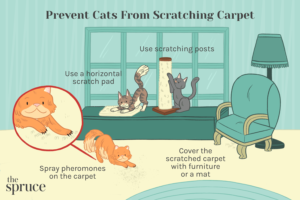
Carpet protectors are clear plastic mats that cover your carpet. They stop cats from digging their claws into the fibers. Place them in areas your cat likes to scratch. The smooth surface feels strange to cats, so they avoid it. Carpet protectors are easy to clean and move as needed.
Applying Deterrent Sprays
Deterrent sprays have smells cats dislike but are safe for pets. Spray the areas where your cat scratches most. The scent helps keep cats away without hurting them. Reapply the spray regularly to keep its effect strong. Choose sprays made for pets to avoid any risk.
Double-sided Tape Tricks
Double-sided tape sticks on the carpet and feels sticky to cats. Cats hate sticky paws, so they stop scratching that spot. Put the tape on small carpet areas or edges. Change the tape often to keep it sticky. This simple trick helps train your cat to stay off the carpet.
Providing Alternatives
Stopping a cat from clawing the carpet needs more than just saying no. Cats scratch to mark territory and sharpen claws. Providing good alternatives helps protect your carpet and keeps your cat happy. The right tools can make a big difference in their behavior.
Choosing The Right Scratching Posts
Pick scratching posts that feel nice to your cat. Posts covered in sisal or carpet work well. Make sure the post is tall enough for your cat to stretch fully. A sturdy base prevents wobbling. Some cats like vertical posts; others prefer horizontal pads. Watch your cat’s style and match it.
Diy Scratching Solutions
Use cardboard or wood to make easy scratching spots at home. Wrap a piece of wood with sisal rope for a simple post. Cardboard scratchers can be placed on the floor. These homemade options save money and can be changed often. Try placing these near the carpet your cat scratches.
Encouraging Proper Use
Show your cat where to scratch by gently placing their paws on the post. Reward your cat with treats or petting after using the post. Move the post closer to the carpet area at first. Slowly move it to a better spot once your cat uses it well. Patience is key; your cat learns with time and care.
Training Your Cat
Training your cat to stop clawing the carpet takes patience and care. Cats scratch to mark their space and keep their claws sharp. Teaching them where to scratch helps protect your floors and furniture. Training also builds trust and a good bond between you and your pet.
Start training early and keep sessions short. Use gentle, clear signals your cat can understand. Reward good behavior and guide them away from bad habits. Consistency helps your cat learn faster and remember the rules.
Positive Reinforcement Techniques
Use treats or praise when your cat scratches the right spot. Clicker training can help mark good behavior clearly. Give rewards immediately so your cat connects the action with the treat. Avoid punishment; it may cause fear or stress. Positive reinforcement encourages your cat to repeat good habits happily.
Redirecting Scratching Behavior
Place scratching posts near the areas your cat likes to scratch. Use different materials like sisal or cardboard to find what your cat prefers. Gently move your cat to the post if it starts on the carpet. Try toys or catnip to attract your cat to the right spot. Redirecting helps your cat learn where it is okay to scratch.
Consistency In Training
Keep training routines the same every day. Use the same words and signals for scratching rules. Reward and redirect without skipping sessions. Consistent actions help your cat understand your expectations. Patience and steady effort make training successful and long-lasting.
Addressing Stress Factors
Stress can cause cats to claw the carpet more often. Cats feel safe when their environment is calm and fun. Reducing stress helps stop unwanted scratching. Simple changes can make a big difference in your cat’s behavior.
Environmental Enrichment
Cats need things to do. Boredom leads to carpet scratching. Add scratching posts or pads near their favorite spots. Place toys around the house to keep them busy. A window perch lets cats watch outside, which is very calming.
Calming Products
Calming sprays and diffusers can ease anxiety. These products use natural scents to relax cats. Try pheromone sprays on carpets or furniture. They help cats feel safe and less likely to scratch. Use calming collars during stressful times like moving or loud noises.
Routine And Playtime
Cats like routine and play. Feed and play at the same times daily. Play sessions tire cats out and reduce stress. Use interactive toys like feather wands or laser pointers. Regular play keeps cats happy and less likely to claw carpets.
When To Seek Professional Help
Knowing when to seek professional help is important for stopping your cat from clawing the carpet. Some problems need expert advice to keep your cat happy and your home safe. Early help can save stress and damage.
Behavioral Issues
Persistent clawing may show deep behavioral problems. Your cat might feel scared, stressed, or bored. Professionals like animal behaviorists can find the cause. They offer training and advice to change bad habits. This help improves your cat’s comfort and your peace.
Veterinary Concerns
Sometimes clawing links to health problems. Pain or skin irritation can make cats scratch more. A vet can check for infections or injuries. They can also spot diseases affecting behavior. Treating health issues often stops the clawing.

Credit: lubcon.ng

Credit: alfiorov.com
Frequently Asked Questions
Why Do Cats Claw Carpets Frequently?
Cats claw to mark territory, sharpen nails, and stretch muscles. Carpets feel soft and satisfy this need.
How Can I Stop My Cat From Scratching Carpet?
Provide scratching posts, use deterrent sprays, and trim your cat’s nails regularly to reduce carpet damage.
What Types Of Scratching Posts Work Best?
Posts covered in sisal or cardboard attract cats. Place them near carpet areas your cat scratches.
Can Nail Caps Prevent Carpet Damage?
Yes, soft nail caps cover claws and stop carpet scratching without hurting your cat.
Does Training Help Stop Carpet Scratching?
Yes, positive training with treats and redirection teaches cats to use scratching posts instead.
Are Sprays Effective To Deter Cats From Carpets?
Yes, sprays with citrus or bitter scents discourage cats from scratching carpet areas.
Conclusion
Stopping a cat from clawing the carpet takes patience and care. Offer your cat good scratching posts nearby. Trim your cat’s nails regularly to reduce damage. Use gentle deterrents like double-sided tape on carpet edges. Reward your cat when it uses the right spots.
Remember, cats scratch to mark and stretch. Understanding this helps you guide their behavior. Small changes can protect your carpet and keep your cat happy. Stay consistent, and results will follow over time.
As an Amazon Associate, I earn from qualifying purchases.