Have you ever struggled to find the right words to describe your cat? Whether you want to share your furry friend’s unique personality or simply capture their appearance, knowing how to describe a cat well can make all the difference.
You’ll discover simple tips and tricks to paint a vivid picture of your cat that will engage anyone who reads it. By the end, you’ll feel confident expressing exactly what makes your cat special. Keep reading to unlock the secrets to describing your feline friend like a pro!

Credit: www.youtube.com
Physical Features
Cats have many physical features that make each one unique. These features help describe a cat clearly. Noticing small details can show a lot about a cat’s look and personality.
Physical features include coat colors, eye shapes, body size, and special marks. Each part tells a story. Observing these details makes a cat easier to describe and remember.
Coat Colors And Patterns
Cats come in many coat colors. Common colors include black, white, gray, orange, and brown. Some cats have solid colors, while others have patterns.
Patterns like stripes, spots, or patches stand out. Tabby cats have striped or swirled coats. Calico cats show three colors mixed. These patterns make cats easy to spot.
Eye Shapes And Colors
Cat eyes have many shapes and colors. Round eyes show alertness. Almond-shaped eyes look calm or curious. Eye size can also vary.
Eye colors range from green to blue, yellow, or copper. Some cats even have two different colored eyes. Eyes give cats a lot of character.
Body Size And Shape
Cats differ in size and shape. Some cats are small and slim. Others are large and muscular. Body shape can be long and lean or short and stout.
The size and shape often match the cat’s breed. These features help describe a cat’s build and movement.
Distinctive Markings
Some cats have unique marks on their fur. These marks can be spots, stripes, or special shapes. A white patch on the nose or a black spot on the paw stands out.
Distinctive markings make a cat easy to identify. They add to the cat’s charm and personality.
Personality Traits
Cats have many different personality traits. These traits make each cat unique and special. Understanding a cat’s personality helps you bond and care for them better. Some cats are lively and playful, while others are calm and loving. Personality traits affect how cats behave and interact with people and pets.
Playfulness And Energy
Many cats love to play. They chase toys, pounce, and run around quickly. Playtime keeps cats active and healthy. Some cats have high energy and need more play. Others prefer quiet moments and short bursts of fun. Watch your cat to learn their play style.
Affection Levels
Some cats enjoy cuddles and petting. They may purr or knead your lap. Other cats like space and show affection in small ways. Cats show love by rubbing heads or sitting nearby. Each cat shows affection differently. Respect their comfort and needs.
Curiosity And Intelligence
Cats are curious creatures. They explore new places and watch everything closely. Intelligent cats learn tricks or open doors. They enjoy puzzles and toys that challenge their mind. Curiosity helps cats stay alert and engaged.
Independence And Social Behavior
Cats are often independent animals. They enjoy alone time and can entertain themselves. Some cats are social and like being around people or other pets. Others prefer solitude and quiet spaces. Notice how your cat balances time alone and socializing.
Common Behaviors
Cats show many behaviors that tell us about their feelings and needs. Understanding these common behaviors helps us connect with them better. Cats use their body and sounds to express themselves. They spend lots of time resting but stay alert to their surroundings. Their natural instincts drive many actions, even inside a home. Watching these behaviors gives clues about a cat’s personality and mood.
Communication Styles
Cats use different sounds like meows, purrs, and hisses to communicate. A soft purr often means contentment. Meowing is usually a call for attention. Hissing warns to stay away. Cats also use body language like tail position and ear movements. A twitching tail can show excitement or irritation. Eyes that are half-closed mean trust and relaxation. These signs help understand what a cat wants or feels.
Sleeping Habits
Cats sleep a lot—usually 12 to 16 hours daily. They like quiet, cozy spots to rest. Cats often nap in short bursts throughout the day. Nighttime activity is common because cats are crepuscular. This means they are most active at dawn and dusk. Deep sleep helps cats recharge energy for hunting and play. Watching where and how cats sleep shows their comfort level.
Hunting Instincts
Even indoor cats keep strong hunting instincts. They may chase toys or small moving objects. Stalking and pouncing are natural behaviors. Cats use their sharp senses to detect prey. Their whiskers and ears help sense movement. Hunting play keeps cats mentally and physically healthy. These instincts connect cats to their wild ancestors.
Grooming Rituals
Cats groom themselves to stay clean and calm. They lick their fur to remove dirt and loose hair. Grooming also helps regulate body temperature. Cats may groom each other to show trust. Over-grooming can be a sign of stress or health issues. Regular grooming is key to a cat’s well-being and comfort.

Credit: www.golfsouthayrshire.com
Breed-specific Traits
Cats come in many breeds, each with special traits. These breed-specific traits help describe a cat clearly. They show differences in looks, behavior, and personality.
Understanding these traits makes it easy to talk about a cat’s unique qualities. It also helps find the right cat for your home.
Popular Cat Breeds
Some cat breeds are famous worldwide. The Siamese cat is known for its striking blue eyes and short coat. Maine Coons are large cats with thick fur. Persian cats have long, fluffy coats and flat faces. Each breed has a distinct style and history. These popular breeds often appear in homes and stories.
Unique Characteristics
Each breed has special features. Bengal cats have spotted or marbled coats like wild cats. Scottish Folds have ears that fold forward. Sphynx cats are hairless and warm to touch. These traits make each breed easy to spot. Unique traits also affect how cats behave and feel.
Temperament Variations
Cat breeds differ in personality. Ragdolls are calm and love to be held. Abyssinians are active and playful. British Shorthairs are gentle and quiet. Knowing temperament helps describe how cats act. It also guides owners on how to care for them.
Appearance Differences
Appearance varies greatly between breeds. Some cats have short hair, others long and fluffy. Eye colors can be green, blue, or gold. Body size and shape also change. Siamese cats are slim, while Persians are rounder. These differences make each breed unique in looks.
Describing Cats In Writing
Describing cats in writing brings their unique charm to life on the page. Words paint pictures that help readers see the cat clearly. Good descriptions make the cat feel real and relatable. This skill helps storytellers and pet lovers share their love for cats effectively.
Using Vivid Adjectives
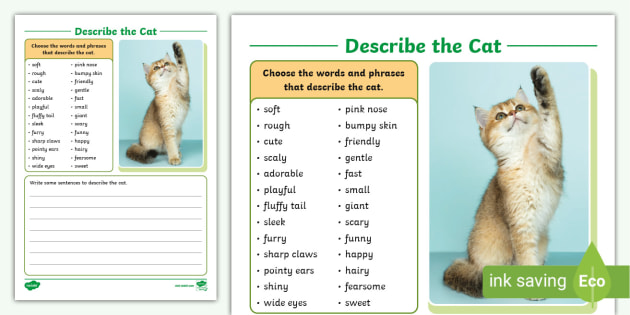
Choose clear and strong adjectives to show the cat’s features. Describe fur as soft, fluffy, or sleek. Eye colors can be bright, sharp, or glowing. Use simple words that create a clear image in the reader’s mind. Avoid too many adjectives to keep the text smooth and easy.
Capturing Movement And Posture
Show how the cat moves or sits to give it life. Describe a cat’s walk as graceful or quiet. Talk about the tail’s position or how the ears tilt. These details make the cat’s behavior vivid and easy to picture. Movement tells a story about the cat’s mood and energy.
Highlighting Personality
Bring out what makes the cat special. Is it curious, shy, playful, or calm? Show personality through actions or small habits. For example, a cat that loves to chase shadows or one that purrs when held. Personality helps readers connect and feel the cat’s spirit.
Creating Emotional Connection
Use words that touch feelings and memories. Share moments that show the cat’s kindness or mischief. Describe how the cat makes people feel safe or happy. Emotional writing helps readers care about the cat. It turns a simple description into a warm story.
Credit: www.twinkl.kr
Frequently Asked Questions
What Words Best Describe A Cat’s Appearance?
Cats often have soft fur, sharp eyes, pointed ears, and long whiskers.
How To Describe A Cat’s Personality Traits?
Cats can be playful, curious, independent, affectionate, or shy.
What Are Common Cat Behaviors To Mention?
Cats like to purr, nap a lot, climb, and chase small things.
How Can I Describe A Cat’s Sounds?
Cats meow, purr, hiss, or growl to express feelings.
What Colors And Patterns Do Cats Have?
Cats come in colors like black, white, orange, and patterns like striped or spotted.
How To Describe A Cat’s Body Shape?
Cats have sleek, flexible bodies with long tails and sharp claws.
Conclusion
Describing a cat can be simple and fun. Focus on its size, color, and fur type. Notice how it moves and behaves. Share what makes the cat unique or special. Use clear, short words to paint a picture. Your description helps others imagine the cat well.
Practice often to improve your skills. Enjoy the process of learning and writing. Describing cats connects you to their world. Keep it natural and true to what you see.
As an Amazon Associate, I earn from qualifying purchases.