If you want to keep your dog healthy and happy, knowing the right amount of rice to feed them is important. You might wonder, “How much rice for my dog by weight in kilograms?”
Giving too much or too little can affect your dog’s digestion and overall well-being. You’ll discover simple, clear guidelines that make feeding rice to your dog easy and stress-free. Keep reading to find the perfect portion size tailored just for your furry friend!
Credit: yumwoof.com
Benefits Of Rice For Dogs
Rice is a common ingredient in many dog diets. It offers several health benefits that support your dog’s well-being. Feeding the right amount of rice can improve digestion, provide energy, and add important nutrients. Understanding these benefits helps you decide how much rice to give based on your dog’s weight.
Rice is gentle on the stomach and easy to prepare. It can be a helpful part of a balanced diet for dogs of all sizes.
Nutritional Value
Rice contains essential nutrients like carbohydrates, vitamins, and minerals. It is low in fat and protein, making it a good supplement. Brown rice offers more fiber and nutrients than white rice. These nutrients support your dog’s overall health and immune system.
Digestive Support
Rice is easy to digest and soothes the stomach. It helps firm up loose stools and supports gut health. Dogs with sensitive stomachs often benefit from rice in their diet. It reduces irritation and helps maintain regular bowel movements.
Energy Source
Carbohydrates in rice provide a quick energy boost. Active dogs need energy for play and exercise. Rice delivers fuel without causing stomach upset. It is a great option for dogs recovering from illness or surgery.
Types Of Rice Suitable For Dogs
Rice is a common ingredient in dog diets. It provides energy and is easy to digest. Different types of rice offer different benefits. Choosing the right type helps keep your dog healthy.
White Rice
White rice is gentle on a dog’s stomach. It cooks quickly and is soft to eat. It is often used for dogs with upset stomachs. White rice has fewer nutrients than brown rice but is easier to digest.
Brown Rice
Brown rice has more fiber and nutrients. It supports healthy digestion and provides vitamins. Dogs with good digestion can enjoy brown rice. It takes longer to cook and is a bit harder to chew.
Other Varieties
Other types like basmati or jasmine rice are also safe. They have similar nutritional values to white rice. Avoid wild or black rice as they may upset digestion. Always cook rice plain without spices or salt for dogs.
Calculating Rice Portions By Dog Weight
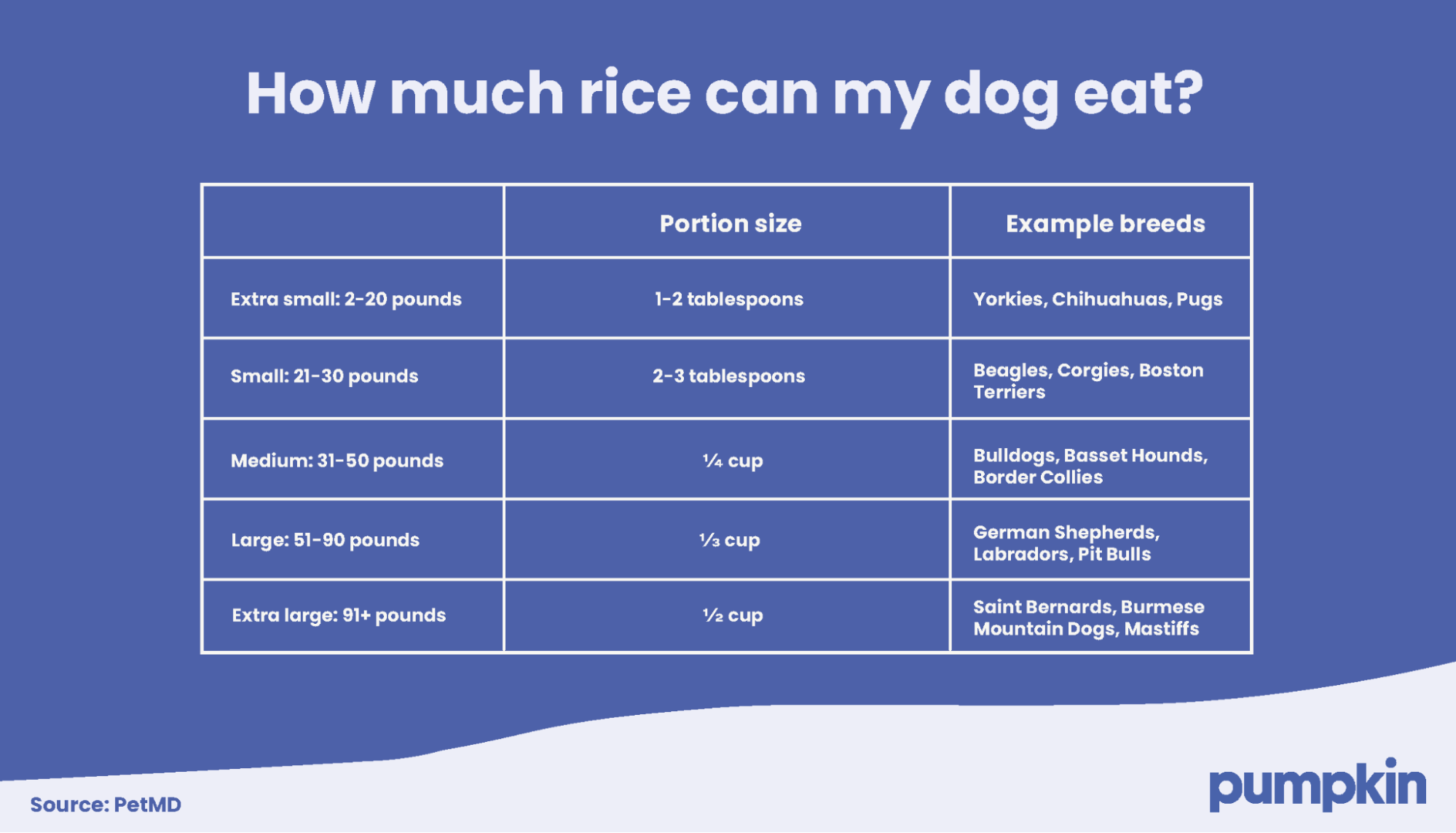
Calculating rice portions by dog weight helps feed your pet the right amount. Rice is a good source of energy and easy to digest. Giving the correct portion supports your dog’s health and avoids overfeeding.
Each dog needs a different rice amount based on its size and weight. This guide breaks down rice portions by dog weight in kilograms. Use these simple rules to measure rice for your furry friend.
Small Dogs (under 10 Kg)
Small dogs need less rice due to their size. Serve about 1/4 to 1/3 cup of cooked rice per meal. This amount gives energy without adding too many calories. Mix rice with protein like chicken or fish for balance.
Medium Dogs (10-25 Kg)
Medium dogs require more rice than small dogs. Offer about 1/2 to 1 cup of cooked rice per meal. This supports their active lifestyle and body needs. Combine rice with vegetables and protein for a full meal.
Large Dogs (over 25 Kg)
Large dogs eat the most rice due to their size and energy use. Provide 1 to 2 cups of cooked rice per meal. This helps maintain their strength and stamina. Always balance rice with quality proteins and fats.
Credit: www.houndsy.com
Rice Feeding Frequency And Preparation
Feeding rice to your dog requires attention to how often and how it is prepared. Proper feeding frequency helps maintain your dog’s health. Correct preparation ensures the rice is safe and easy to digest. Understanding these points helps you give the right amount of rice for your dog’s weight.
How Often To Feed Rice
Rice should not be the main food for your dog. Use it as a treat or a supplement. Feeding rice once or twice a week is usually enough. Too much rice can cause nutrient imbalance. Observe your dog’s reaction to rice and adjust the frequency if needed.
Cooking Methods
Cook rice thoroughly with water only. Avoid adding salt, spices, or oil. Boiling or steaming works best. Soft, plain rice is easier for dogs to digest. Let the rice cool before serving to prevent burns or discomfort.
Mixing Rice With Other Foods
Rice mixes well with lean meats or vegetables. This creates a balanced meal for your dog. Avoid mixing rice with fatty or spicy foods. Use small portions of rice combined with protein. This helps your dog get more nutrients and energy.
Risks And Precautions
Rice can be a healthy part of your dog’s diet. Still, it is important to know the risks and take precautions. Feeding too much rice or feeding it incorrectly can cause problems for your dog’s health. Knowing what to watch out for helps keep your dog safe and happy.
Overfeeding Concerns
Giving your dog too much rice can lead to weight gain. Rice is high in carbohydrates and calories. Overfeeding may cause obesity and related health issues. Dogs need a balanced diet with proteins, fats, and carbs. Too much rice reduces other important nutrients in their meals. Always measure rice carefully based on your dog’s weight.
Food Allergies
Some dogs may be allergic to rice or grains. Signs include itching, redness, and stomach upset. Allergies can cause diarrhea or vomiting. If your dog shows these signs, stop feeding rice. Consult your vet for testing and advice. Rice allergies are rare but possible. Watch your dog’s reaction when introducing rice for the first time.
When To Avoid Rice
Do not feed rice to dogs with diabetes. Rice can raise blood sugar levels quickly. Avoid rice if your dog has an upset stomach or diarrhea. Rice may worsen digestive problems in some dogs. Puppies need special diets; avoid rice unless advised by a vet. Always check with your vet before adding rice to your dog’s meals.
Credit: www.pumpkin.care
Signs Of Proper Rice Intake
Feeding rice to your dog in the right amount supports their health well. Rice is easy to digest and provides energy. Watching your dog for signs of proper rice intake helps ensure their diet is balanced. Knowing these signs helps you adjust their meals if needed.
Healthy Digestion
Proper rice intake keeps your dog’s digestion smooth. Rice helps firm up stool and reduce diarrhea. Your dog should have regular bowel movements without discomfort. No bloating or gas means rice amounts are right. Healthy digestion shows your dog’s tummy is happy.
Energy Levels
Rice provides carbohydrates that fuel your dog’s body. Watch for steady energy throughout the day. Your dog should not seem tired or hyperactive. Balanced rice intake helps maintain calm and active behavior. Good energy means your dog’s diet is well planned.
Weight Management
Rice can help control your dog’s weight when fed properly. Too much rice may cause weight gain. Too little may lead to low energy or weight loss. Monitor your dog’s body shape and weight regularly. Proper rice intake supports a healthy weight balance.
Frequently Asked Questions
How Much Rice Should I Feed My Dog By Weight?
Feed about 10% of your dog’s weight in rice mixed with other food daily.
Can Dogs Eat Plain Rice Every Day Safely?
Plain rice is safe in small amounts but should be balanced with protein.
Is White Or Brown Rice Better For Dogs?
Brown rice has more nutrients, but white rice is easier to digest for dogs.
How To Calculate Rice Amount For A 10 Kg Dog?
Give about 100 grams of cooked rice mixed with protein for a 10 kg dog.
Can Too Much Rice Harm My Dog’s Health?
Too much rice may cause weight gain or upset stomach in dogs.
Should Rice Replace Dog Food Entirely By Weight?
Rice should not replace dog food completely; it lacks essential nutrients.
Conclusion
Feeding the right amount of rice keeps your dog healthy. Measure rice based on your dog’s weight in kilograms. Start with small portions and adjust as needed. Rice should balance with other food, not replace it. Watch your dog’s reaction to new food.
Consult a vet for specific advice. Healthy meals help your dog stay active and happy. Simple steps make feeding easier and safer. Rice can be part of a good diet. Keep your dog’s needs in mind always.
As an Amazon Associate, I earn from qualifying purchases.