Are you wondering how much chicken is safe and healthy to feed your dog? You want to give your furry friend a tasty treat, but you also worry about getting the portion just right.
Too little, and your dog might stay hungry; too much, and it could upset their stomach or cause other health issues. You’ll discover simple, clear answers to help you feed your dog chicken the right way. Keep reading to learn how to balance taste and nutrition perfectly for your loyal companion.
Benefits Of Feeding Chicken To Dogs
Feeding chicken to your dog can be a healthy choice. Chicken is a natural food that many dogs enjoy. It offers many benefits that support your dog’s health and energy. Understanding these benefits helps you feed the right amount safely.
Nutritional Value Of Chicken
Chicken is rich in essential nutrients. It contains vitamins like B6 and niacin. These help with energy and brain function. Chicken also has minerals such as phosphorus and selenium. These support bone health and the immune system.
The meat is low in fat, especially if skinless. This helps maintain a healthy weight. Chicken is easy to digest, making it gentle on your dog’s stomach. It is a good choice for dogs with sensitive digestion.
Chicken As A Protein Source
Protein is vital for your dog’s muscles and tissues. Chicken provides high-quality protein. This helps build strong muscles and repair body cells. Protein also supports healthy skin and a shiny coat.
Compared to other meats, chicken is leaner. It provides protein without too much fat. This balance helps keep your dog fit and active. Protein from chicken is also easy for dogs to absorb.
Health Benefits For Dogs
Chicken supports your dog’s overall health. It boosts energy levels and helps maintain weight. The nutrients in chicken help improve the immune system. A strong immune system means fewer illnesses and faster healing.
Chicken can also help with allergies. Many dogs tolerate chicken well compared to other proteins. Feeding chicken may reduce skin problems and itching. It is a simple way to keep your dog happy and healthy.
Factors Affecting Chicken Portions
Feeding chicken to your dog requires careful thought. Various factors decide the right portion size. Understanding these helps keep your dog healthy and happy. This section explains key factors affecting chicken portions for dogs.
Dog’s Size And Weight
Small dogs need less chicken than large dogs. Larger dogs burn more energy and need bigger portions. Feeding too much chicken to small dogs can cause weight gain. Adjust portions based on your dog’s body size.
Age And Activity Level
Puppies and young dogs require more protein to grow. Active dogs also need more chicken to support energy. Older dogs may need smaller portions due to slower metabolism. Match chicken amounts to your dog’s age and activity.
Health Conditions To Consider
Some dogs have health issues affecting their diet. Dogs with kidney or liver problems need limited protein. Allergies or food sensitivities may restrict chicken intake. Always check with your vet before changing portions for health reasons.
Calculating The Right Amount
Feeding your dog the right amount of chicken is important for their health. Too much or too little can cause problems. Calculating the correct portion helps keep your dog happy and strong. This section explains how to find the right amount for your dog’s needs.
General Portion Guidelines
Start with a simple rule: chicken should be part of your dog’s total daily food. About 10% to 20% of their diet can be chicken. For small dogs, give one to two tablespoons of cooked chicken per meal. Medium dogs can have about a quarter to half a cup. Large dogs may eat up to one cup of chicken per meal. Always check your dog’s weight and health before feeding.
Adjusting Portions For Different Breeds
Dog breeds vary in size and energy needs. Small breeds like Chihuahuas need less chicken than big breeds like German Shepherds. Active breeds need more protein to stay energetic. Less active dogs need smaller portions to avoid weight gain. Puppies and pregnant dogs require extra food. Adjust portions based on your dog’s breed, activity, and life stage.
Using Calories To Measure Intake
Calories guide the right amount of chicken for your dog. One cup of cooked chicken has about 335 calories. Calculate your dog’s daily calorie needs based on weight and activity. Feed chicken as part of those calories. For example, if your dog needs 500 calories a day, 100 calories can come from chicken. Use a kitchen scale and calorie chart to measure precisely.
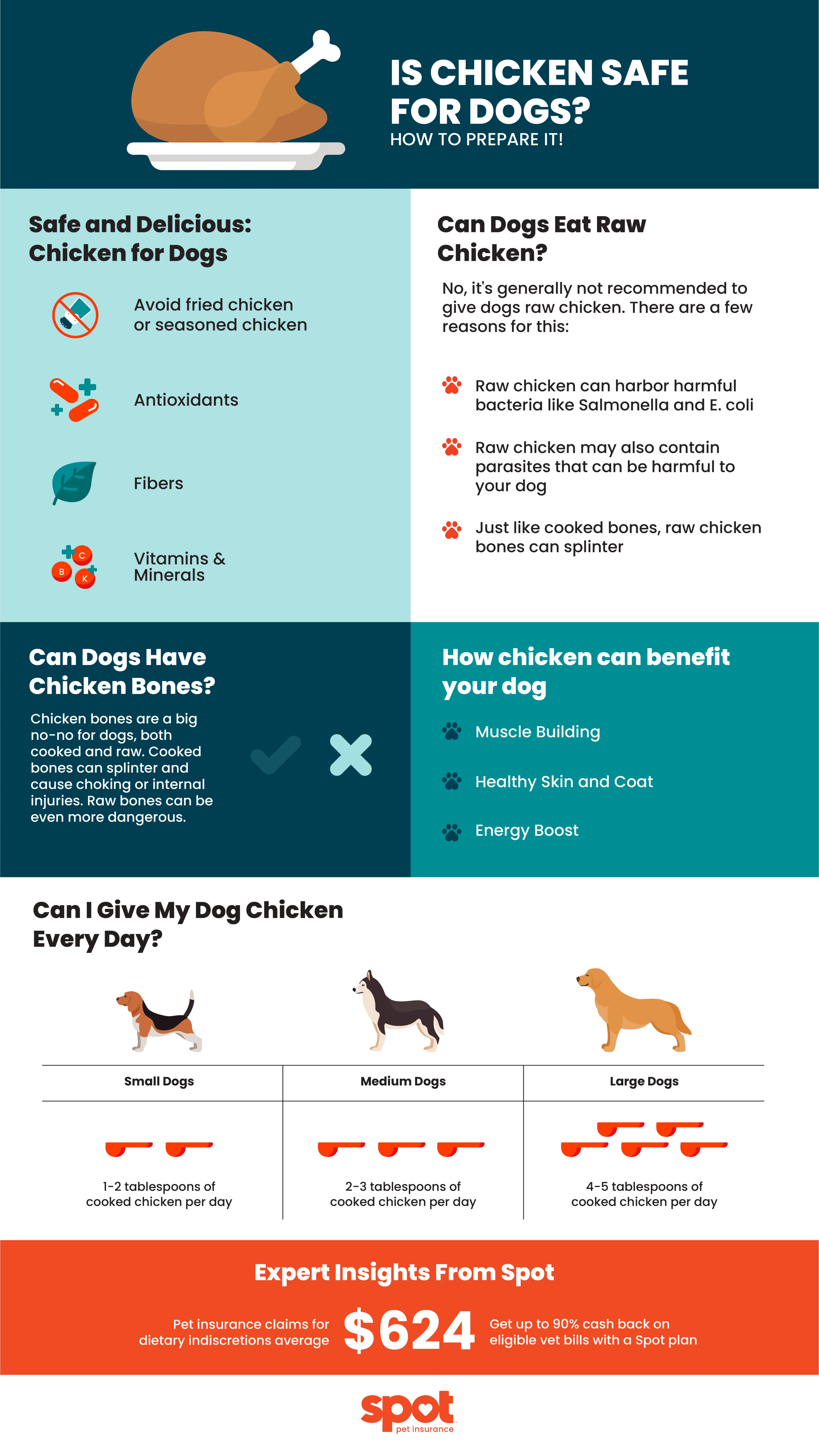
Credit: spotpet.com
Preparing Chicken For Dogs
Preparing chicken for dogs is simple but needs care. Proper preparation keeps your dog safe and healthy. Chicken can be a good source of protein for dogs when cooked right.
Raw or poorly cooked chicken can cause health problems. This section explains how to prepare chicken safely for your dog.
Safe Cooking Methods
Boiling and baking are the safest ways to cook chicken for dogs. Avoid frying or grilling with spices. Cook the chicken until no pink remains inside. Make sure the meat is fully cooked to kill bacteria.
Avoiding Harmful Ingredients
Do not add salt, onions, garlic, or spices. These ingredients can harm dogs. Plain chicken is best. Avoid sauces and marinades that contain harmful ingredients.
Portioning And Storage Tips
Cut chicken into small, bite-sized pieces. This helps your dog eat easily and avoid choking. Store cooked chicken in airtight containers. Keep it in the fridge for up to three days. Freeze portions for longer storage. Always thaw frozen chicken in the fridge before feeding.
Combining Chicken With Other Foods
Chicken is a healthy choice for dogs but feeding it alone is not enough. Dogs need a mix of different foods for good health. Combining chicken with other foods helps provide all the nutrients dogs require. This approach supports energy, strong muscles, and a shiny coat.
Balanced Diet Considerations
Chicken provides protein but lacks some vitamins and minerals. Dogs also need carbohydrates, fats, and fiber. Adding vegetables like carrots or green beans helps supply fiber and vitamins. Rice or sweet potatoes offer energy through carbohydrates. A balanced diet means mixing protein with these other food groups.
Supplements And Additives
Sometimes, chicken and veggies don’t cover all nutritional needs. Supplements can fill these gaps. Fish oil adds omega-3 fatty acids for a healthy coat. Calcium supports bones and teeth, especially in growing dogs. Always check with a vet before adding supplements. Too much of any nutrient can harm your dog.
Signs Of Nutritional Deficiency
Watch your dog for signs of poor nutrition. Dull fur and dry skin may mean a lack of fatty acids. Weakness or slow growth can signal protein or vitamin shortages. Digestive issues like diarrhea might show poor fiber intake. Regular vet visits help catch these problems early.

Credit: yumwoof.com
Monitoring Your Dog’s Response
Monitoring your dog’s response is key after adding chicken to their diet. Watch how your dog reacts to changes in food. This helps you feed the right amount of chicken. Careful observation can prevent health problems and ensure your dog stays happy.
Tracking Weight And Energy
Check your dog’s weight regularly. Sudden gain or loss can signal issues. Notice changes in energy too. More energy means good nutrition. Less energy might mean the diet needs adjusting. Keep a simple log of weight and activity. This helps spot trends over time.
Identifying Allergies Or Intolerances
Look for signs of allergies or intolerances. Itchy skin, redness, or swelling are common signs. Digestive upset like vomiting or diarrhea also matters. These symptoms may show if your dog cannot handle chicken. Stop feeding chicken if these signs appear. Try other protein sources instead.
When To Consult A Veterinarian
Contact a vet if you notice worrying symptoms. Persistent itching or digestive problems need professional advice. Sudden weight changes also require a check-up. A vet can guide the best diet for your dog’s health. Regular vet visits keep your dog safe and strong.
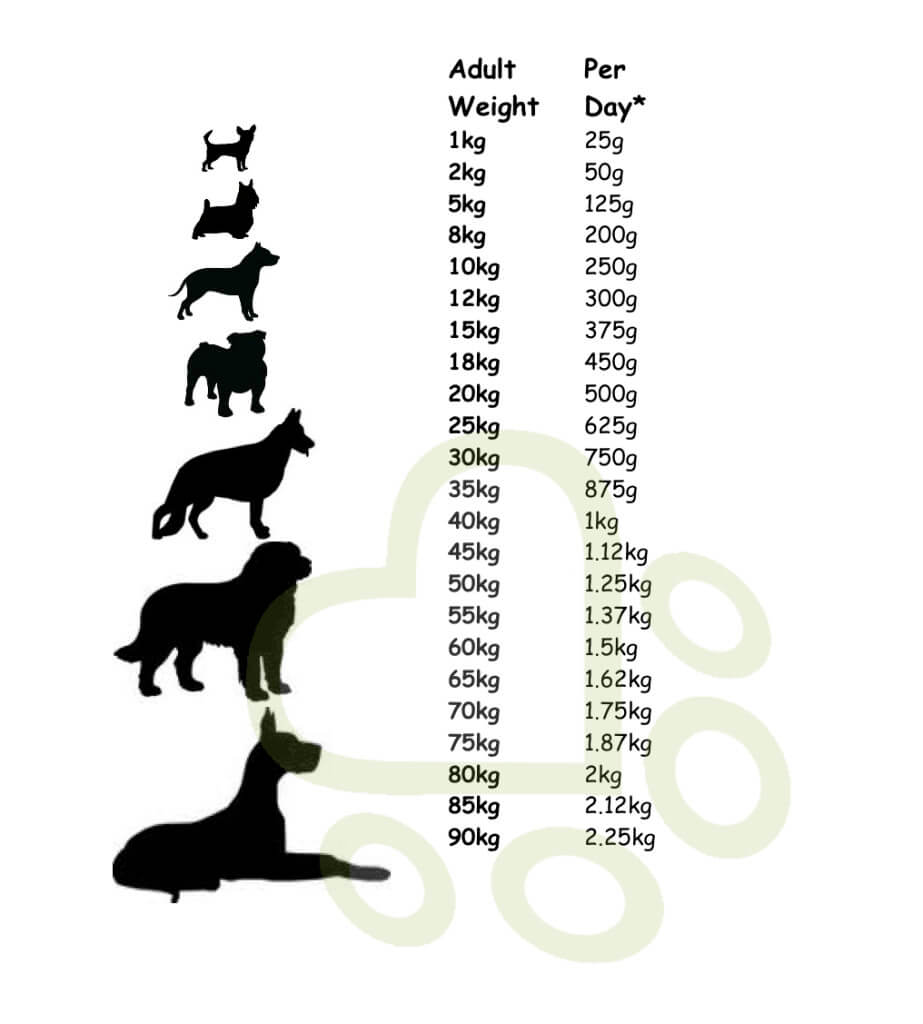
Credit: conti.nc
Frequently Asked Questions
How Much Chicken Can I Feed My Dog Daily?
Feed your dog 10-20% of their daily diet as chicken, depending on size and activity.
Is Cooked Or Raw Chicken Better For Dogs?
Cooked chicken is safer, as raw may carry bacteria harmful to dogs.
Can Chicken Replace All Dog Food?
Chicken can be part of meals but should not replace complete dog food.
How To Avoid Feeding Too Much Chicken To Dogs?
Balance chicken with other nutrients to prevent weight gain and health issues.
What Chicken Parts Are Best For Dogs?
Lean, boneless chicken breast is best; avoid bones and fatty skin.
Can Dogs Eat Chicken Skin And Bones?
No, skin is fatty and bones can cause choking or injury.
Conclusion
Feeding your dog the right amount of chicken keeps them healthy and happy. Watch their weight and energy to adjust portions. Too much chicken can upset their stomach. Too little may not give enough nutrients. Balance chicken with other foods for a complete diet.
Always check with your vet for advice. Feeding your dog well helps them live longer. Simple care makes a big difference every day. Keep meals tasty and safe. Your dog will thank you with wagging tails.
As an Amazon Associate, I earn from qualifying purchases.