If you own a horse or are thinking about boarding one, having a clear horse boarding agreement is essential. This document protects both you and the stable, setting clear expectations about care, costs, and responsibilities.
Without it, misunderstandings can lead to costly problems or even put your horse’s well-being at risk. You’ll discover what a horse boarding agreement should include and why it’s so important for keeping your horse safe and happy. Keep reading to make sure you’re fully prepared before you sign anything.
Key Elements Of A Boarding Agreement
A horse boarding agreement is a legal document that sets clear rules. It protects both the horse owner and the boarding facility. This agreement outlines the responsibilities and expectations for both sides. Understanding the key elements helps avoid misunderstandings and disputes.
Each part of the agreement has a specific purpose. It defines who is involved, what services are provided, how payments work, and how the contract can end. These details create a strong foundation for a good relationship between owner and facility.
Identification Of Parties
This section names the horse owner and the boarding facility. It includes full names and contact details. Clear identification helps in communication and legal clarity. It ensures both parties know who is responsible.
Description Of Services
This part explains the services offered by the boarding facility. It may include feeding, stall cleaning, exercise, and veterinary care. Clear descriptions prevent confusion about what is included. Both sides agree on what the horse will receive daily.
Boarding Fees And Payment Terms
This section states the cost of boarding and how to pay. It mentions the amount, payment schedule, and method. It also covers late fees or extra charges. Clear payment terms help avoid money disputes and keep things smooth.
Duration And Termination Clauses
This part sets the contract length and how to end it. It explains notice periods and conditions for termination. Both parties know how to leave the agreement properly. This protects their rights and avoids surprises.
Health And Safety Responsibilities
Health and safety are key parts of any horse boarding agreement. Both the barn owner and the horse owner share duties to keep the horse safe and well. Clear rules help avoid confusion and protect the horse’s well-being. This section covers the main responsibilities related to health and safety.
Vaccination And Medical Care
Vaccinations keep horses healthy and prevent disease spread. The horse owner must provide proof of current vaccines. Regular check-ups by a vet are important. The barn owner should know about any ongoing treatments or special needs. Quick action is needed if the horse shows illness signs.
Emergency Protocols
Clear emergency plans save lives. Both parties should know how to act during accidents or sudden illness. Contact details for vets and emergency services must be available. The barn owner often handles first aid and calling the vet. Horse owners should update emergency contacts regularly.
Liability And Insurance
Liability rules explain who is responsible for injuries or damages. The agreement should state if the barn owner or horse owner covers costs. Insurance protects both sides from financial loss. Horse owners must have liability insurance. Barn owners may need insurance for the facility and staff.
Daily Care And Feeding
Daily care and feeding are key parts of a horse boarding agreement. Proper routines help keep horses healthy and happy. Clear guidelines protect both the horse owner and the facility. This section covers essential details about feeding schedules, exercise, grooming, and stall care.
Feeding Schedules
Feeding must follow a set schedule to maintain the horse’s health. Horses need small meals several times a day. The agreement should state feeding times and types of feed. Special diets or supplements require clear instructions. Consistency prevents digestive problems and stress.
Exercise And Turnout
Exercise is vital for a horse’s well-being. Daily turnout in a pasture or paddock allows natural movement. The agreement should detail turnout times and conditions. Some horses may need extra riding or lunging. Proper exercise helps prevent boredom and stiffness.
Grooming And Stall Maintenance
Regular grooming keeps horses clean and comfortable. The agreement should specify who is responsible for grooming. Daily stall cleaning is essential to maintain hygiene. Fresh bedding and clean water must be provided. A clean stall reduces health risks and odors.

Credit: standard-boarding-agreement.pdffiller.com
Access And Visitation Rules
Access and visitation rules are key parts of a horse boarding agreement. They set clear limits on when and how owners and visitors can enter the property. Clear rules help avoid confusion and keep the horses safe. They also make sure the barn runs smoothly for everyone.
Owner Access Rights
Owners usually have the right to visit their horses at set times. The agreement should say what hours are allowed. Owners may need to give notice before coming. Sometimes, access can be limited for safety or care reasons. The barn may close during bad weather or emergencies. Clear rules protect both the horses and the facility.
Visitor Policies
Visitors often need permission before entering the barn. The owner should tell the barn manager about guests. Visitors must follow barn rules to stay safe. They should not disturb the horses or other boarders. Some barns limit the number of visitors or visiting hours. These policies keep the environment calm and secure.
Communication Expectations
Good communication is important for access and visits. Owners should update the barn about changes in plans. The barn staff will inform owners about any access issues. Clear messages help avoid misunderstandings. Simple, timely communication ensures smooth visits and care. Everyone stays informed and the horses get proper attention.
Handling Disputes And Issues
Disputes and issues can arise in horse boarding agreements. Clear steps help solve problems quickly. Handling conflicts well protects both the horse owner and the boarding facility. This section explains ways to manage disagreements and keep the relationship strong.
Conflict Resolution Methods
First, try to talk calmly and clearly. Discuss the problem without blaming. Use written communication to avoid misunderstandings. If needed, involve a neutral third person. Mediation can help both sides find a fair solution. Keep records of all discussions and agreements.
Modification Of Agreement
Changes to the original agreement may be necessary. Both parties must agree to any changes. Put all modifications in writing. Sign and date the updated agreement. This ensures everyone understands new terms. Regular reviews can prevent future disputes.
Termination Procedures
Termination rules must be clear in the agreement. State the notice period required to end boarding. Specify conditions that allow immediate termination. Explain responsibilities for final payments and horse removal. Follow legal rules to avoid problems. Proper closure protects both parties’ rights.
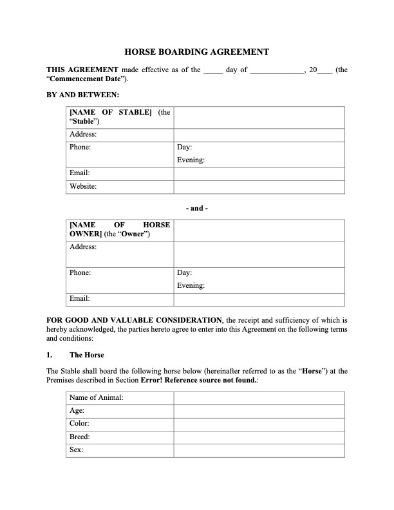
Credit: www.megadox.com
Additional Services And Fees
Horse boarding agreements often include extra services beyond basic care. These services come with additional fees. Understanding these costs helps horse owners plan their budget well. Knowing what is available and the price ensures clear communication between owners and facilities.
Training And Lessons
Many boarding facilities offer training sessions for horses. These can include riding lessons for owners. Trainers help improve horse skills and rider confidence. Fees vary based on session length and trainer experience. Some places charge per lesson, others offer packages. It is important to clarify costs before starting training.
Special Care Requests
Special care may be needed for some horses. This includes medical treatments or diet changes. Facilities usually charge extra for such care. Owners must inform the stable about any special needs early. Clear instructions help ensure the horse receives proper attention. Extra fees cover the time and materials used for special care.
Equipment And Supplies
Boarding agreements may cover some equipment, but not all. Owners often need to provide their own tack and supplies. Some stables rent or sell equipment like saddles or blankets. These rentals or purchases come with additional costs. It is best to ask about available equipment and prices beforehand. This avoids surprises during the boarding period.
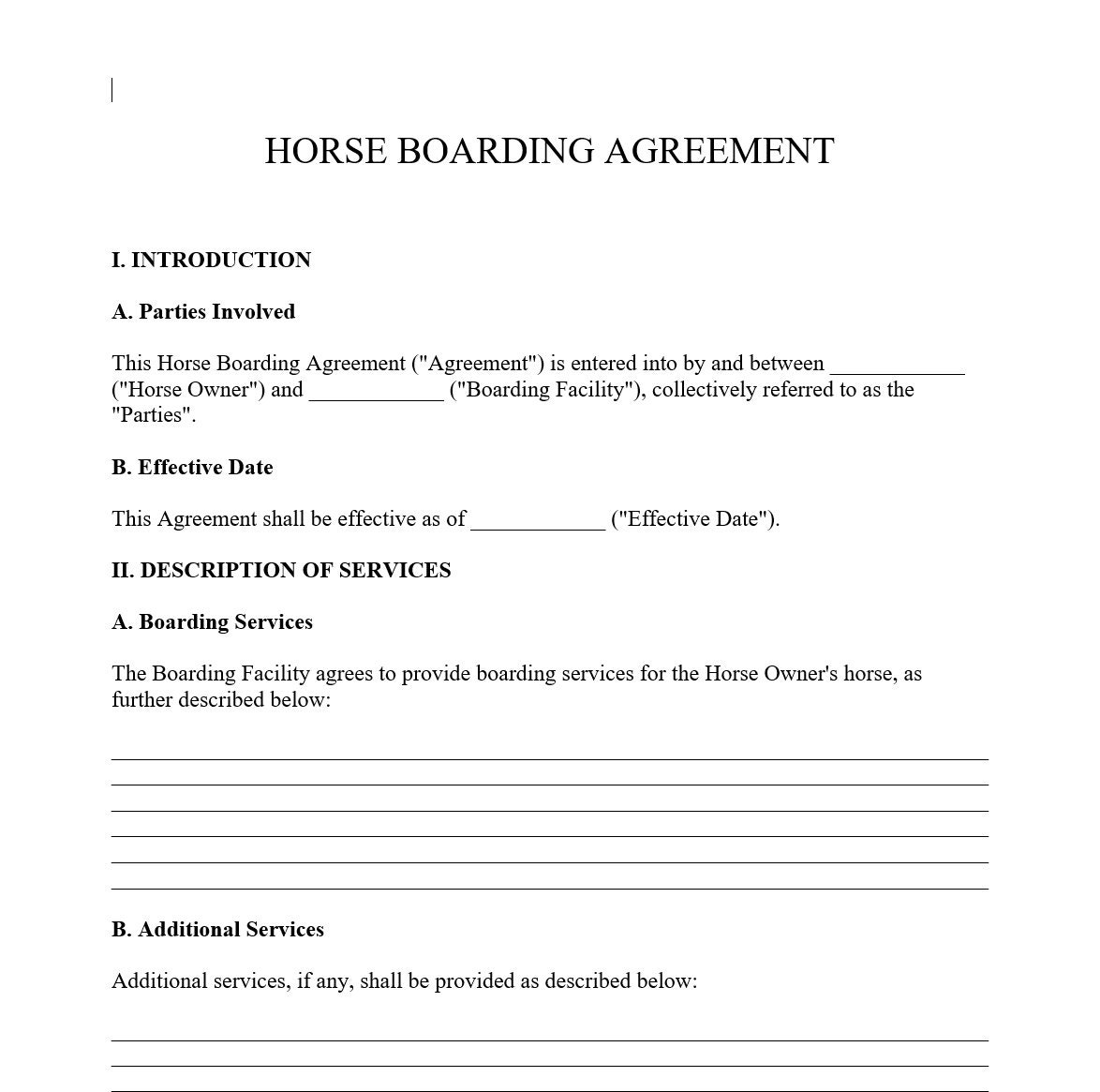
Credit: www.etsy.com
Frequently Asked Questions
What Is A Horse Boarding Agreement?
A horse boarding agreement is a contract between a horse owner and a stable owner.
Why Is A Horse Boarding Agreement Important?
It protects both parties by clearly stating rights and responsibilities.
What Key Details Are In A Horse Boarding Agreement?
It includes fees, care instructions, liability, and termination terms.
How Does A Horse Boarding Agreement Handle Emergencies?
It outlines emergency care plans and who pays for vet services.
Can I Change My Horse Boarding Agreement Later?
Yes, but both parties must agree and sign the changes.
What Happens If Either Party Breaks The Agreement?
The contract describes penalties or steps to resolve the dispute.
Conclusion
A clear horse boarding agreement protects both owner and barn. It sets rules for care, payment, and responsibilities. This helps avoid confusion and arguments later. Everyone knows what to expect from the start. A good agreement keeps the horse safe and happy.
Take time to write it carefully. It builds trust and smooth daily life. Keep it simple and fair for all. A strong agreement makes boarding easier and more enjoyable.
As an Amazon Associate, I earn from qualifying purchases.