Are you looking for a clear and reliable way to protect your horse and your interests? A well-crafted horse boarding contract template is exactly what you need.
It helps you set expectations, avoid misunderstandings, and keep your horse safe and cared for. You’ll discover the key elements that every horse boarding contract should include, so you can feel confident and secure every time you entrust your horse to a boarding facility.
Keep reading to learn how to create a contract that works for you and your horse.
Key Elements Of A Boarding Contract
A horse boarding contract is essential for clear agreements. It protects both horse owners and stable operators. This contract sets expectations and avoids future problems. It should include key elements to cover all necessary details. These points create a strong foundation for trust and safety.
Parties Involved
This section names the horse owner and the stable operator. It includes full names and contact details. Clear identification helps avoid confusion. Both parties must agree to the terms.
Boarding Services Offered
Details about the care provided go here. It covers feeding, grooming, exercise, and stall cleaning. Any special services like training or vet visits should be listed. Clear descriptions help owners understand what they pay for.
Payment Terms
This part explains the boarding fees and due dates. It states acceptable payment methods and late fees. Clear rules about deposits or refunds are included. It keeps financial matters transparent and fair.
Duration And Termination
The contract states how long it lasts. It also explains how either party can end the agreement. Notice periods and conditions for termination must be clear. This avoids surprises if someone wants to leave.
Liability And Insurance
This section outlines who is responsible for injuries or damages. It states if the stable carries insurance or if the owner needs it. Clear liability terms protect both parties from legal problems.
Emergency Procedures
Instructions for handling emergencies are crucial. It includes contacts for vets and emergency services. It also explains who makes decisions if the owner is unavailable. Clear plans ensure quick, proper care for the horse.
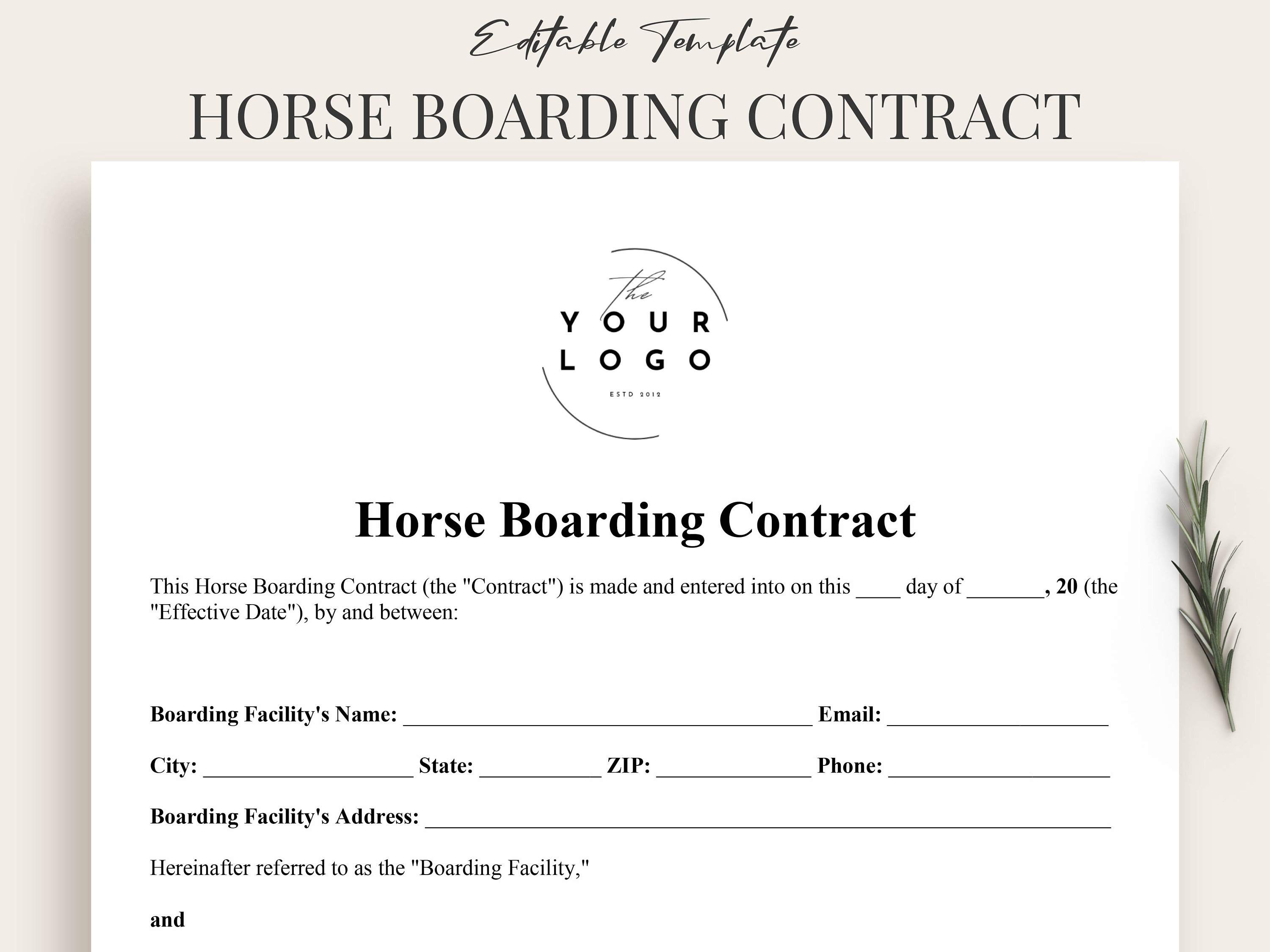
Credit: www.etsy.com
Safety Clauses To Include
Safety clauses protect both horses and owners in a boarding contract. Clear rules reduce risks and prevent misunderstandings. These clauses ensure proper care, health, and security of the horses. They set clear expectations for everyone involved. Below are key safety clauses to include in a horse boarding contract.
Health And Vaccination Requirements
Require proof of vaccinations before boarding. Regular health checks keep horses safe from diseases. Specify which vaccines are needed and their schedule. Demand immediate notification if a horse gets sick. This prevents the spread of illness among all animals.
Handling And Care Instructions
Detail how horses should be fed and groomed. Include instructions for exercise and rest periods. Explain who can handle the horse and how. Safe handling prevents injuries to horses and staff. Clear care rules keep horses comfortable and healthy.
Access And Visitor Policies
State who can visit the horses and when. Limit visitor access to protect horses from stress. Require visitors to follow safety rules on the property. Control access to reduce accidents and theft risks. Keep the environment calm and secure for all animals.
Dispute Resolution Methods
Include steps to solve conflicts about horse care or fees. Encourage communication before legal actions. Suggest mediation or arbitration as fair solutions. Clear dispute methods prevent costly and long legal fights. They help keep good relationships between owners and boarders.
Legal Considerations
Legal considerations are crucial when drafting a horse boarding contract template. They protect both the stable owner and the horse owner. Clear legal terms help avoid disputes and misunderstandings. It is important to include specific clauses that follow the law. The contract must be fair and clear to all parties.
State And Local Regulations
Different states and cities have rules about horse boarding. These rules affect stable safety, animal care, and business operations. The contract must follow these laws to be valid. Ignoring local rules can cause legal problems. Research local regulations before writing the contract.
Contract Enforceability
A contract must have clear and specific terms. Vague or unfair clauses might not hold up in court. Both parties should agree to the rules and sign the document. The contract should include payment terms, services, and responsibilities. This ensures the contract can be enforced legally.
Waivers And Indemnity
Waivers protect the stable owner from certain liabilities. Indemnity clauses ask the horse owner to accept risks. These clauses must be clear and fair. They should explain what risks the owner assumes. Proper waivers reduce legal claims after accidents or injuries.
Confidentiality Agreements
Confidentiality agreements keep sensitive information private. This includes business details and personal data. The contract can include clauses to protect this information. Both parties must agree not to share or misuse it. Confidentiality builds trust between stable and horse owners.
Credit: www.pandadoc.com
Customizing The Template
Customizing the horse boarding contract template helps make it fit your specific needs. Each stable and horse owner has different requirements. Adjusting the contract ensures clear rules and smooth operations. This section explains how to change the template to suit various boarding styles, owner requests, and seasonal needs.
Adjusting For Different Boarding Types
Boarding can include full care, partial care, or self-care. Each type needs unique terms in the contract. Modify the template to clearly state what services are included. Specify feeding, grooming, exercise, and medical care responsibilities. This avoids confusion and sets clear expectations for both parties.
Adding Specific Owner Requests
Horse owners may have special instructions. These can involve feed types, turnout schedules, or health treatments. Include a section in the contract to list these requests. Make sure the stable agrees to follow them. This protects the horse’s well-being and strengthens trust.
Updating For Seasonal Changes
Seasons affect horse care routines. Winter may require extra blankets, while summer needs fly protection. Update the contract to cover these changes. Mention adjustments in feed, turnout times, or stable maintenance. Keeping the contract current helps avoid disputes and keeps horses comfortable year-round.
Tips For Clear Communication
Clear communication is key in a horse boarding contract. It helps avoid confusion and builds trust. Both parties understand their roles and responsibilities better. This leads to a smoother boarding experience for the horse and the owner.
Setting Expectations
Write down clear rules and duties in the contract. Include feeding times, exercise routines, and health care needs. Explain payment terms and what services are included. This helps the owner and boarder know what to expect. Clear expectations reduce misunderstandings.
Regular Updates And Inspections
Schedule frequent updates about the horse’s condition and care. Use phone calls, emails, or a journal to share information. Regular inspections ensure the horse’s environment is safe and clean. This keeps the owner informed and reassures them about their horse’s well-being.
Handling Complaints
Create a simple process for raising concerns. Encourage open and respectful communication. Listen carefully and respond quickly to complaints. Solve problems calmly to maintain a good relationship. Clear steps for complaints prevent small issues from growing bigger.

Credit: standard-boarding-agreement.pdffiller.com
Frequently Asked Questions
What Is Included In A Horse Boarding Contract Template?
A horse boarding contract lists services, fees, care rules, and responsibilities for both parties.
Why Use A Horse Boarding Contract Template?
It clearly defines terms and prevents misunderstandings between horse owners and barn operators.
How To Customize A Horse Boarding Contract Template?
Edit details like board fees, care instructions, and liability clauses to fit your needs.
What Are Common Clauses In Horse Boarding Contracts?
Common clauses cover payment terms, health care, emergency procedures, and liability limits.
Who Should Sign The Horse Boarding Contract?
Both the horse owner and the barn manager must sign to make it legal.
How Often Should A Horse Boarding Contract Be Reviewed?
Review the contract yearly or when changes in care or fees occur.
Conclusion
A clear horse boarding contract protects both owners and boarders. It sets rules, fees, and care duties. This helps avoid confusion and problems later. Use a simple template to cover all key points. Review the contract carefully before signing. Good communication keeps horses safe and happy.
A well-written contract makes boarding easier for everyone. Trust and respect grow with clear agreements. Save time and worry by having everything in writing. Make your horse boarding experience smooth and fair.
As an Amazon Associate, I earn from qualifying purchases.