If you’re considering a raw diet for your cat, one big question probably stands out: how much should you actually feed? Getting the right amount is key to keeping your furry friend healthy and happy.
Feed too little, and your cat might miss out on essential nutrients. Feed too much, and you could be inviting unwanted weight gain or digestive issues. You’ll discover simple, clear guidelines to help you find the perfect feeding balance. Keep reading to make sure your cat’s raw diet truly works for them.
Benefits Of A Raw Diet
A raw diet for cats offers many health benefits. It mimics what cats eat in the wild. This natural feeding style supports their overall well-being. Cats thrive on fresh, whole foods without fillers or grains. The benefits of a raw diet show in digestion, coat, skin, and energy levels.
Improved Digestion
Raw diets contain natural enzymes that aid digestion. These enzymes help break down food easily. Cats absorb nutrients better from raw meals. This reduces digestive problems like vomiting or diarrhea. A healthy gut means a happier cat overall.
Enhanced Coat And Skin Health
Raw food is rich in essential fatty acids. These nutrients promote a shiny, soft coat. Cats eating raw diets often have less itching and dryness. Healthy skin means fewer allergies and irritations. A glowing coat is a sign of good nutrition.
Boosted Energy Levels
Raw food provides high-quality protein and fat. These nutrients fuel a cat’s active lifestyle. Cats on raw diets show more playfulness and alertness. Their muscles stay strong and lean. More energy means better quality of life.
Credit: rawmeow.com.au
Factors Influencing Portion Size
Determining the right amount of raw food for your cat depends on several key factors. Each cat has unique needs that affect how much they should eat daily. Understanding these factors helps you provide a balanced and healthy diet for your pet.
Cat’s Age And Weight
Kittens need more food per pound than adult cats. They grow fast and burn energy quickly. Adult cats require stable portions to maintain their weight. Overweight cats need smaller portions to reduce fat. Underweight cats benefit from increased food amounts. Adjust meals based on your cat’s current weight and life stage.
Activity Level
Active cats burn more calories. They need larger portions to stay energized. Indoor cats usually need less food than outdoor cats. Cats that play often require extra nutrition. Sedentary cats require smaller meals to avoid weight gain. Monitor your cat’s activity to adjust food amounts properly.
Health Conditions
Some health issues affect a cat’s diet needs. Cats with diabetes may need controlled portions. Kidney or liver diseases require special feeding plans. Overweight cats need restricted calorie intake. Always follow your vet’s advice on feeding amounts. Health conditions must guide how much you feed your cat.
Calculating Daily Raw Food Amount
Calculating the right amount of raw food for your cat is important. It helps keep your cat healthy and active. Every cat is different, so the amount of food varies. Factors like age, weight, and activity affect how much to feed. Use simple methods to find the right daily portion.
Percentage Of Body Weight Method
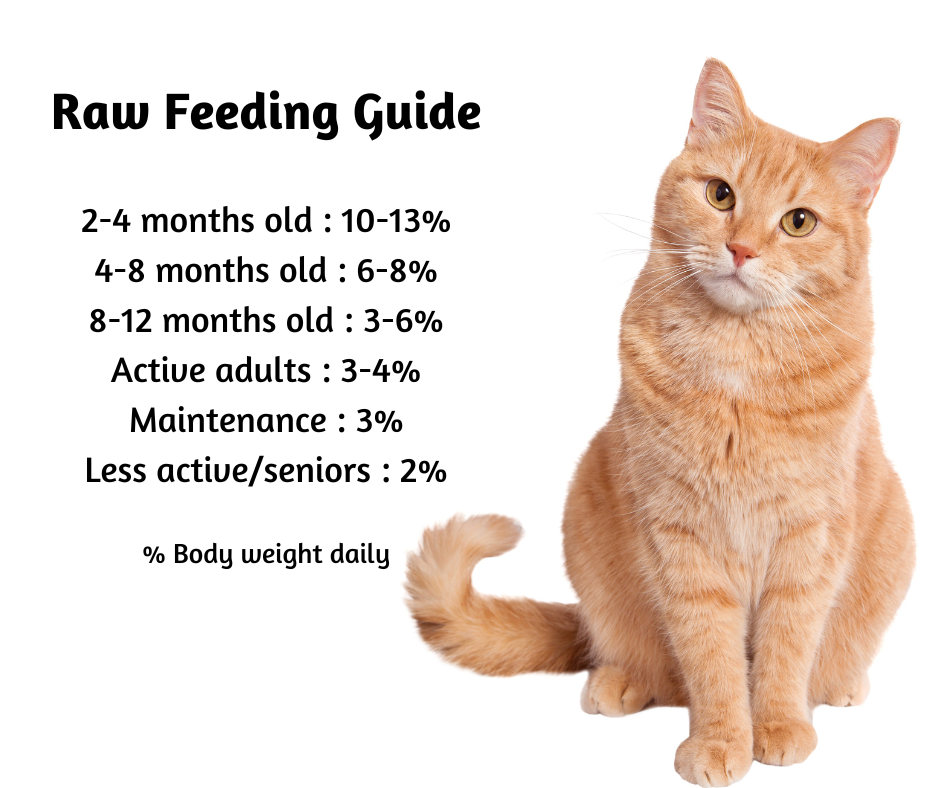
Feed your cat about 2% to 4% of its body weight daily. For example, a 10-pound cat needs 0.2 to 0.4 pounds of raw food. Start with 3% for an average active cat. Adjust the amount based on your cat’s needs and condition.
Adjusting Portions For Growth
Kittens need more food for growth and energy. Feed them 4% to 6% of their body weight. Gradually reduce the portion as they reach adulthood. Pregnant or nursing cats also need extra food. Keep adjusting to support their changing needs.
Monitoring Weight Changes
Watch your cat’s weight regularly. If your cat gains too much, reduce the food slightly. If your cat loses weight, increase the portion. Keep an eye on their energy and coat health too. Adjust feeding to keep your cat in good shape.
Credit: thelittlecarnivore.com
Balancing Nutrients In Raw Meals
Balancing nutrients in raw meals is key for a healthy cat diet. Cats need the right mix of protein, fats, vitamins, and minerals. Too much or too little of any nutrient can cause health problems. Careful planning helps meet their needs and supports strong muscles, shiny fur, and good energy.
Understanding the main nutrient groups guides proper feeding. Raw diets should include quality protein, essential fats, and necessary supplements. Each part plays a role in keeping cats fit and happy.
Protein Sources
Protein is the main part of a cat’s raw diet. Cats need meat to build and repair body tissues. Choose fresh meat like chicken, turkey, rabbit, or beef. Organ meats such as liver and kidney are rich in nutrients and help balance the diet. Avoid too much muscle meat alone. Variety in protein sources provides all essential amino acids.
Essential Fats
Fats give cats energy and support brain and skin health. Omega-3 and omega-6 fats are vital for a balanced raw meal. Fish oil or flaxseed oil adds these healthy fats. Fatty fish like salmon or sardines are also good choices. Keep fats balanced to prevent obesity and skin problems.
Supplements And Additives
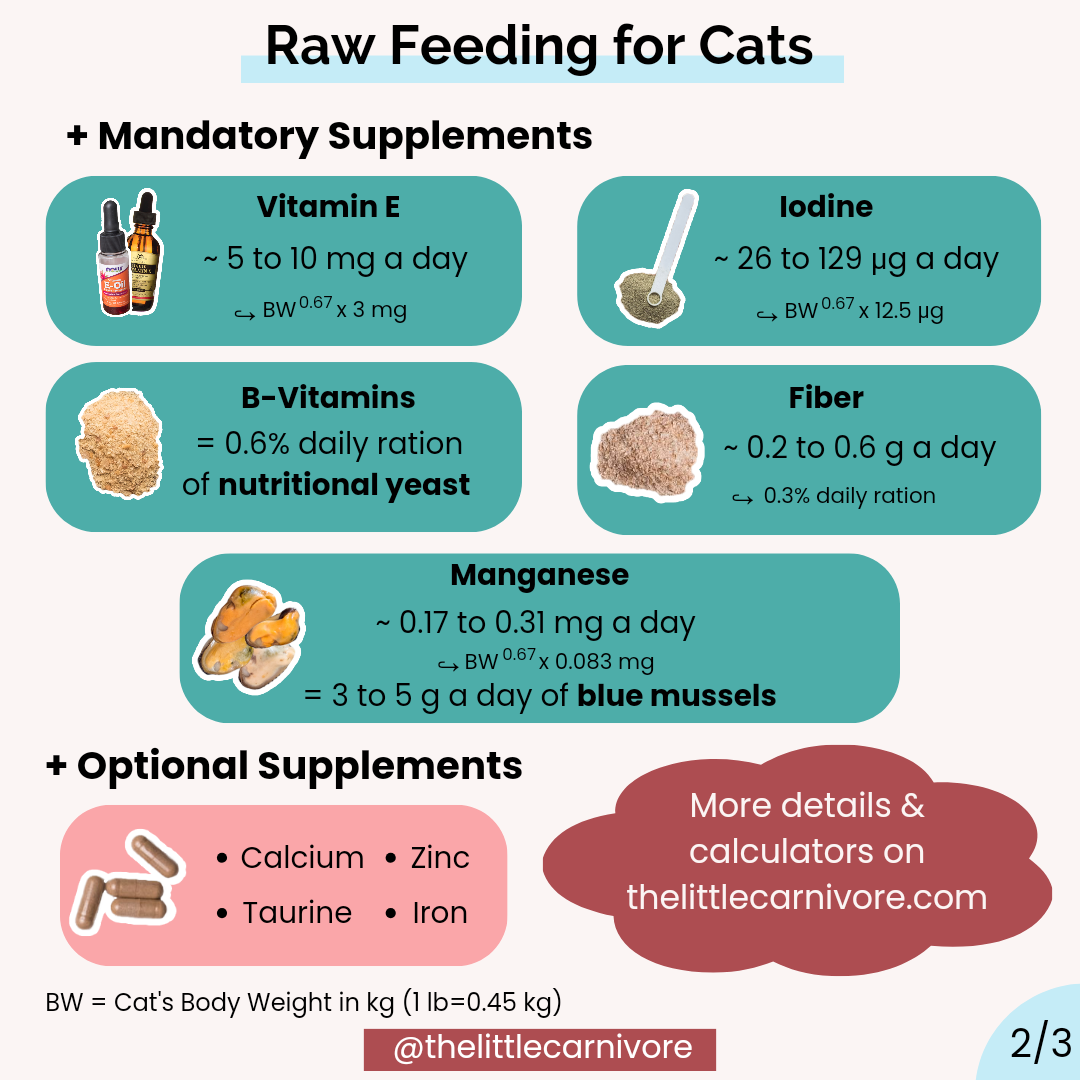
Raw diets may lack some vitamins and minerals. Calcium is important for strong bones. Ground eggshells or bone meal can add calcium. Taurine is an essential amino acid for heart and eye health. Many raw feeders add taurine powder. Vitamins like A, D, and E may need supplements too. Supplements fill gaps and support overall health.
Feeding Schedule And Frequency
Feeding your cat a raw diet needs careful planning. A good feeding schedule keeps your cat healthy and happy. It helps with digestion and energy levels. Cats thrive on routine. Feeding at set times each day supports their natural instincts. Understanding when and how often to feed helps you provide the best care.
Meal Timing Tips
Feed your cat two to three times daily. Choose consistent times for each meal. Morning and evening work well for most cats. Avoid feeding late at night to support good sleep. Watch your cat’s behavior to adjust timing. Some cats prefer smaller, more frequent meals.
Portion Splitting
Divide the daily amount into portions. Smaller meals prevent overeating and weight gain. Use a kitchen scale for accuracy. Portion control helps maintain ideal weight. Spread portions evenly throughout the day. This method matches a cat’s natural hunting pattern.
Handling Treats And Snacks
Limit treats to less than 10% of daily food. Choose healthy, raw-friendly snacks like freeze-dried meat. Avoid giving too many treats between meals. Treats should not replace balanced meals. Use treats to reward good behavior or training. Monitor your cat’s weight to avoid overfeeding.
Signs Of Overfeeding And Underfeeding
Feeding your cat the right amount of raw food is key to their health. Too much or too little can cause problems. Watch for clear signs that show if you are overfeeding or underfeeding your cat. These signs help you adjust the diet properly. Knowing what to look for keeps your cat happy and healthy.
Weight Gain Or Loss
Rapid weight gain often means overfeeding. Extra calories turn into fat quickly. Your cat’s body shape changes visibly. On the other hand, steady weight loss points to underfeeding. A thin or bony cat needs more food. Regularly check your cat’s weight to track changes.
Behavioral Changes
Overfed cats may become lazy or less active. They might sleep more and play less. Underfed cats act restless or hungry. They may meow more or search for food. Sudden mood shifts can signal feeding issues. Pay attention to your cat’s daily behavior.
Digestive Issues
Overfeeding can cause diarrhea or vomiting. Your cat’s stomach may feel uncomfortable or swollen. Underfeeding can lead to constipation or dry stools. Both problems affect your cat’s energy and comfort. Monitor your cat’s bathroom habits closely.
Transitioning To A Raw Diet
Transitioning your cat to a raw diet needs care and patience. Cats are used to their usual food. Sudden changes can upset their stomach or cause refusal to eat. A smooth switch helps your cat adjust well. It also lets you watch how your cat reacts to new food. This way, you feed the right amount and keep your cat healthy.
Gradual Introduction
Start by mixing a small amount of raw food with your cat’s current diet. Use about 10% raw food and 90% old food. Increase the raw food slowly over two to three weeks. This slow change helps your cat’s body get used to the new diet. Watch your cat’s interest in the food. Some cats need more time to accept raw food.
Monitoring Reactions
Check your cat’s behavior and health daily. Look for signs like vomiting, diarrhea, or lack of energy. These signs mean the diet change might be too fast. Also, note if your cat eats eagerly or refuses the food. Keep a journal of your cat’s reactions. It helps you and your vet understand how the diet fits your cat.
Adjusting Portions Accordingly
Change the amount of raw food based on your cat’s weight and activity. Cats that are very active need more calories. Older or less active cats need less food. Use your cat’s body condition to guide feeding amounts. If your cat loses weight, increase portions slightly. If your cat gains too much weight, reduce the food. Regularly weigh your cat to track progress.
Common Mistakes To Avoid
Feeding a cat a raw diet can be rewarding but tricky. Many cat owners make simple errors that affect their pet’s health. Avoiding these mistakes helps keep your cat happy and strong. Focus on what your cat needs and how much to feed.
Ignoring Individual Needs
Every cat is unique. Age, size, and activity level change how much food they need. Feeding all cats the same amount can cause problems. Watch your cat’s weight and energy. Adjust food portions based on these signs.
Skipping Nutrient Balance
Raw diets must have the right nutrients. Too much meat without bones or organs can harm your cat. Cats need protein, fat, vitamins, and minerals. Use recipes or advice from experts to balance meals. Avoid feeding only muscle meat.
Overfeeding Treats
Treats are fun but can add extra calories. Overfeeding treats may cause weight gain. Treats should be small and rare. Count treat calories as part of daily food. Keep treats healthy and simple to support diet goals.

Credit: www.youtube.com
Frequently Asked Questions
How Much Raw Food Should I Feed My Cat Daily?
Feed your cat about 2-3% of its body weight in raw food each day.
Does Cat Age Affect The Raw Diet Portion Size?
Yes, kittens need more food per pound than adult cats for growth and energy.
Should I Adjust Raw Food Amount For An Indoor Cat?
Indoor cats usually need less food due to lower activity levels.
How Often Should I Feed My Cat A Raw Diet?
Most cats thrive on two meals per day with balanced raw portions.
Can I Overfeed My Cat A Raw Diet?
Yes, overfeeding can cause weight gain and health problems in cats.
How To Know If My Cat Is Eating Enough Raw Food?
Watch your cat’s weight, energy, and stool to judge if portions are right.
Conclusion
Feeding your cat a raw diet needs careful thought. Start with small portions and watch your cat’s weight. Cats need a balanced mix of meat, bones, and organs. Adjust the amount as your cat grows or changes activity. Always keep fresh water nearby.
Consult a vet to make sure your cat stays healthy. Feeding the right amount helps keep your cat happy and strong. Simple steps lead to better care and a healthier pet.
As an Amazon Associate, I earn from qualifying purchases.