When you decide to train your horse, clear agreements are key to a smooth experience. A Horse Training Contract protects both you and the trainer by setting clear expectations.
It helps avoid misunderstandings, keeps everyone on the same page, and ensures your horse gets the care and training it deserves. If you want peace of mind and a successful partnership, understanding what goes into this contract is a must.
Keep reading to learn exactly what you need to look for and why it matters for you and your horse.
Key Elements Of A Horse Training Contract
A horse training contract sets clear rules between the trainer and the horse owner. It helps avoid confusion and problems. Knowing the key elements of this contract is important. These parts explain the rights and duties of both sides. They also protect everyone involved.
Parties Involved
This section names the trainer and the horse owner. It includes their contact details. Clear identification helps track who is responsible. It avoids mix-ups during the training period.
Training Services Description
Here, the contract lists what training will happen. It explains the methods and goals. Details may include riding lessons or behavior work. Clear descriptions set the right expectations.
Duration And Schedule
This part shows the length of the training. It states start and end dates. It also covers how often training sessions occur. A clear schedule keeps both sides on track.
Payment Terms
Payment details are in this section. It tells how much and when to pay. It includes fees for extra services or late payments. Clear payment rules prevent money disputes.
Liability And Insurance
This section explains who is responsible for accidents or injuries. It states if insurance is needed and what it covers. Clear liability terms protect both trainer and owner.
Setting Clear Expectations
Setting clear expectations is key to a successful horse training contract. It helps both the owner and trainer understand their roles. Clear terms reduce confusion and build trust. This section explains important parts to include in the contract.
Goals And Objectives
Define specific goals for the horse’s training. List what skills or behaviors the horse should learn. Set realistic and measurable targets. This guides the trainer and shows progress to the owner. Clear goals keep everyone focused and motivated.
Responsibilities Of Owner And Trainer
Outline duties for both the owner and the trainer. The owner must provide proper care and timely payments. The trainer should deliver professional training and regular updates. Both must communicate openly. Clear roles avoid misunderstandings and ensure smooth cooperation.
Health And Safety Protocols
Include rules to protect the horse’s health and safety. Specify vaccination and veterinary care requirements. Define emergency procedures and handling methods. Safety guidelines protect the horse and trainer. This ensures a safe training environment for all.
Legal Considerations
Legal considerations are important in horse training contracts. They protect both the owner and the trainer. Clear rules help avoid confusion and problems later.
This section covers key legal points in these contracts. Knowing them helps create a fair and solid agreement.
Contract Enforcement
Contract enforcement means making sure both sides follow the agreement. The contract must be clear and signed by both parties. It should state the duties and payments clearly. If someone breaks the contract, the other can ask for help in court. This protects the interests of both the horse owner and the trainer.
Dispute Resolution
Disputes can happen even with good contracts. The contract should say how to solve problems. Many contracts use mediation or arbitration. These methods are faster and less costly than going to court. They help both sides reach a fair solution without long delays.
Termination Clauses
Termination clauses explain how to end the contract. They state the notice period and reasons to stop the agreement. This can include poor performance or safety issues. Clear termination rules prevent sudden or unfair endings. Both parties know their rights and duties if the contract ends.
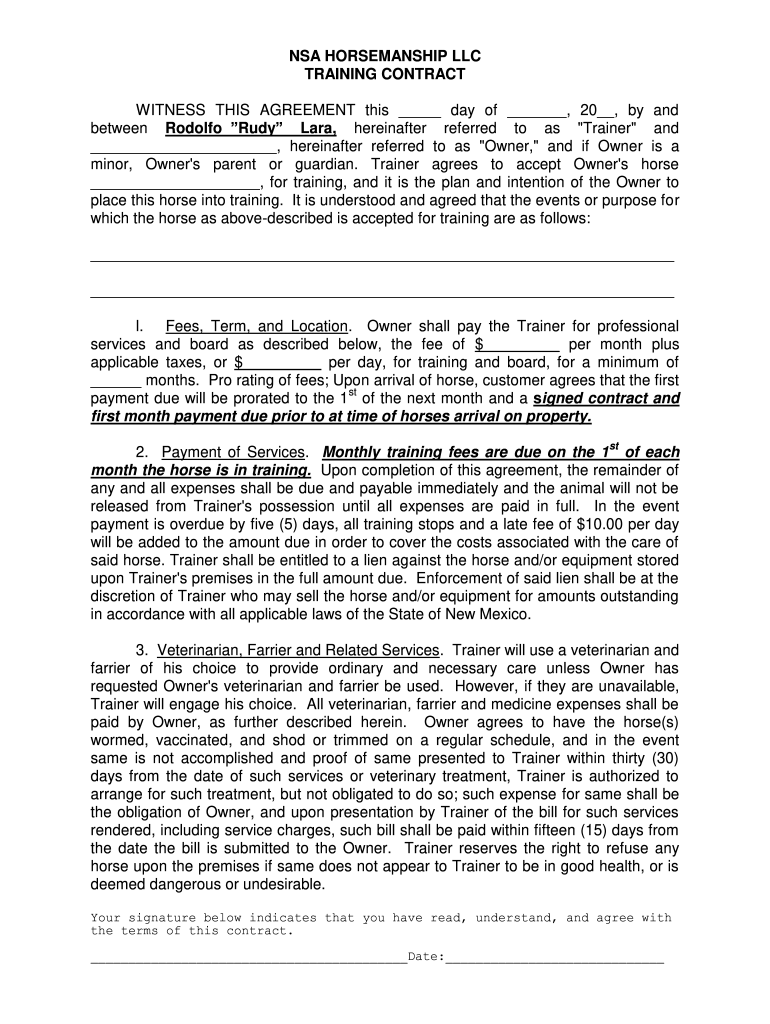
Credit: horse-training-contract.pdffiller.com
Communication Strategies
Clear communication is key in any horse training contract. It builds trust between trainer and owner. It helps avoid confusion and keeps both parties informed. Effective communication strategies create a smooth training experience for the horse and owner.
Regular Updates
Regular updates keep the owner informed about the horse’s progress. Trainers should provide updates weekly or biweekly. These updates can include training activities, behavior changes, and health notes. Short, clear messages work best to keep communication simple and direct.
Progress Reports
Progress reports show how the horse improves over time. They include specific goals reached and new skills learned. Trainers can use photos or videos to support the report. These reports help owners see the value of the training and stay engaged.
Handling Concerns
Concerns must be addressed quickly and openly. Owners should feel comfortable sharing questions or worries. Trainers should listen carefully and respond honestly. A clear plan to solve problems helps keep trust strong and the training on track.
Tips For A Successful Training Relationship
Creating a strong training relationship is key for success. Both the horse and trainer need clear communication and shared goals. The right approach helps the horse learn and stay motivated. Trust and respect between owner, trainer, and horse build a positive environment. Regular checks on progress keep training on track and allow changes when needed. These tips improve the chances of a smooth and effective training experience.
Choosing The Right Trainer
Pick a trainer who understands your horse’s needs. Experience matters, but so does patience. Look for someone who listens and explains clearly. A good trainer uses kind methods that suit your horse’s personality. Check reviews and ask for references. The right trainer feels like a partner, not just a service provider.
Building Trust And Respect
Trust grows from gentle handling and consistency. Respect the horse’s limits and signals. Let the horse feel safe and calm during sessions. Avoid harsh punishments or sudden changes. A respectful trainer values the horse as a living being. This bond makes training easier and more effective.
Monitoring Progress And Adjustments
Track each training session’s results carefully. Note what works and what does not. Adapt the plan based on the horse’s response. Small steps lead to steady improvement. Regular feedback helps the trainer and owner stay aligned. Flexibility keeps the training suited to the horse’s pace and needs.

Credit: www.scribd.com
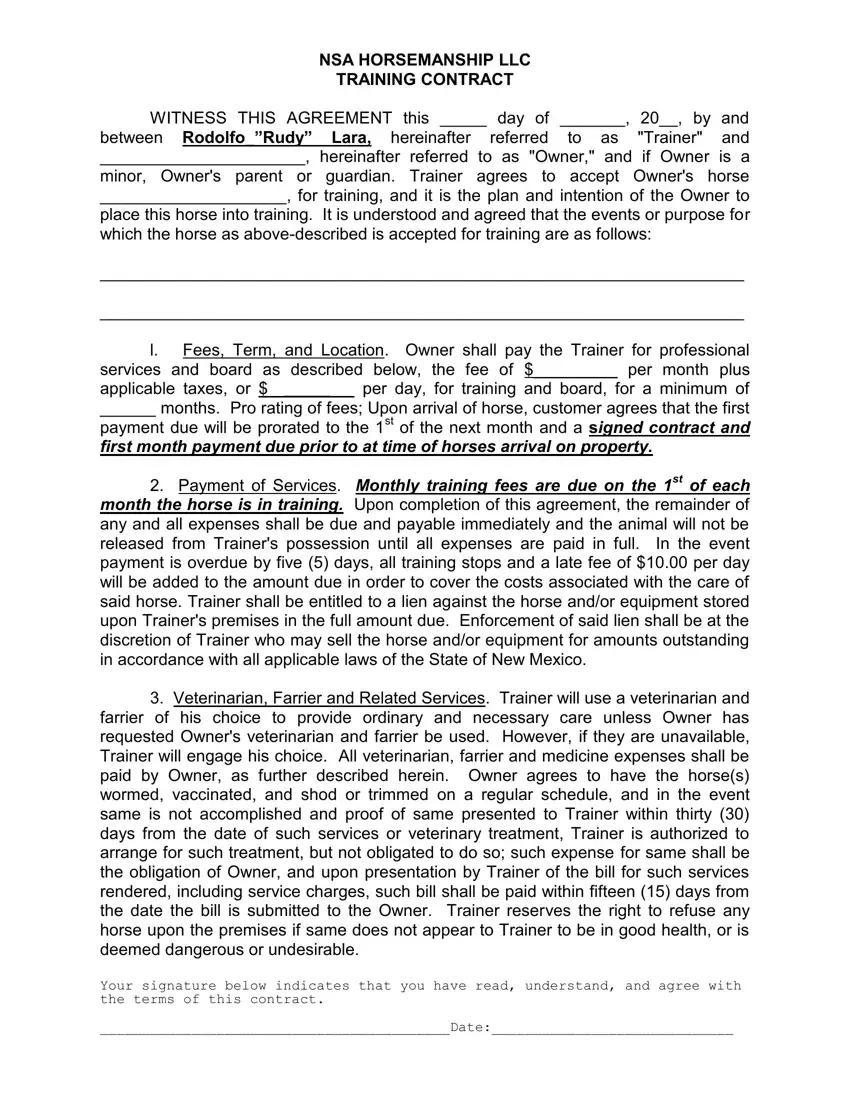
Credit: formspal.com
Frequently Asked Questions
What Is A Horse Training Contract?
A horse training contract is a written agreement between a horse owner and a trainer. It outlines training terms and responsibilities.
Why Is A Horse Training Contract Important?
It protects both the owner and trainer by clearly defining duties, payment, and care expectations.
What Key Details Should A Horse Training Contract Include?
It should cover training goals, payment terms, duration, care instructions, and liability clauses.
How Does A Horse Training Contract Protect The Horse Owner?
It ensures the trainer follows agreed care and training standards, reducing risks and misunderstandings.
Can A Horse Training Contract Be Customized?
Yes, contracts can be tailored to fit specific training needs and agreements.
What Happens If Contract Terms Are Broken?
The contract usually explains steps for dispute resolution or termination to protect both parties.
Conclusion
A clear horse training contract protects both owner and trainer. It sets rules, expectations, and payment terms. This helps avoid confusion and disputes later on. Everyone knows their duties and responsibilities from the start. A good contract builds trust and smooth communication.
It keeps the focus on the horse’s progress and care. Taking time to write it right is worth the effort. Trust and clarity lead to better training results. Always keep a signed contract before any training begins. Simple, clear contracts make horse training safer and fairer.
As an Amazon Associate, I earn from qualifying purchases.