Are you tired of finding shredded carpet every time you look down? Your cat’s scratching can be frustrating and damaging, but there’s good news—you don’t have to live with it.
Understanding why your cat scratches and learning simple, effective ways to redirect this behavior can save your carpet and keep your furry friend happy. Keep reading, and you’ll discover easy steps to protect your home while giving your cat the attention it needs.
:strip_icc()/keep-cat-from-scratching-carpet-554831_final-a8dcf3bb9e3b4c269259604c244f42d5.png)
Credit: www.thesprucepets.com
Why Cats Scratch
Cats scratch for many reasons. It is a natural and important behavior for them. Understanding why cats scratch helps you protect your carpet better. Let’s explore the main reasons cats scratch.
Instinct And Territory
Scratching is part of a cat’s natural instinct. It helps them mark their territory. Cats have scent glands in their paws. When they scratch, they leave both a visual mark and a scent. This tells other animals that this space belongs to them. Scratching also helps cats feel safe and secure in their home.
Nail Maintenance
Scratching keeps a cat’s nails healthy. It removes the old, outer nail layers. This makes their claws sharper and cleaner. Without scratching, a cat’s nails can become too long or painful. It also helps them stretch their muscles in their paws and legs. This simple act is good for their body and nails.
Stress And Boredom
Cats scratch to relieve stress and boredom. When they feel anxious, scratching calms them down. It is a way to release energy and frustration. A bored cat scratches more to entertain itself. Providing toys and playtime can reduce this behavior. Understanding these feelings helps you care for your cat better.
Identifying Scratching Spots
Finding where your cat scratches the carpet is the first step to stop it. Cats choose spots for many reasons. They may like texture, location, or need to mark territory. Knowing these spots helps you protect your carpet better. Watch your cat’s behavior closely. Look for signs that show their favorite scratching areas.
Common Areas Cats Target
Cats often scratch near doors and corners. These spots give them good surfaces and help mark boundaries. Carpet edges are also popular. Cats enjoy scratching where the carpet meets the wall. Furniture legs and rugs can attract scratching too. High-traffic zones where your cat spends time may be targeted. Check these areas regularly for damage.
Signs Of Damage
Scratched carpet looks rough and worn. You may see loose threads or pulled fibers. The surface might feel uneven or bumpy. Look for small tears or holes. Carpet color may fade or change where scratched. You might find claw marks on the backing. Spotting these signs early helps protect your carpet faster.
Protecting Your Carpet
Protecting your carpet from cat scratches is important for keeping your home neat. Cats scratch to mark territory and sharpen claws. Stopping them can save your carpet’s look and texture. You can use simple tools and tricks to keep your carpet safe. These methods work well without hurting your cat.
Using Carpet Protectors
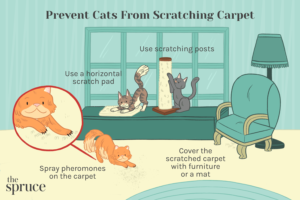
Carpet protectors are clear mats that cover the carpet area. They create a barrier between claws and fibers. Cats do not like the hard, smooth surface. Placing protectors near scratching spots helps stop damage. These mats are easy to clean and move around. They keep your carpet safe without changing your room’s look.
Applying Deterrent Sprays
Deterrent sprays have smells cats avoid. Spraying these on your carpet keeps cats away. Choose sprays that are safe and non-toxic. Reapply sprays often for best results. Cats learn to avoid areas with these scents. This method helps protect your carpet gently and without harm.
Double-sided Tape Tricks
Double-sided tape feels sticky on cat paws. Place strips on spots where your cat scratches. Cats dislike the sticky feeling and leave those areas. This simple trick works fast to change behavior. Tape is cheap and easy to use. It helps protect your carpet while training your cat.
Providing Alternatives
Stopping your cat from scratching the carpet needs patience. Providing good alternatives helps your cat use its energy in the right way. Cats scratch to stretch and mark their space. Giving them proper places to scratch saves your carpet and keeps your cat happy.
Choosing The Right Scratching Posts
Pick scratching posts that feel good to your cat. Cats like rough textures like sisal or cardboard. Posts should be tall enough for full stretching. Choose sturdy posts that don’t wobble when scratched. Some cats prefer horizontal boards; others like vertical posts. Watch your cat’s habits to find the best type.
Encouraging Use With Catnip
Sprinkle catnip on the scratching post to attract your cat. Catnip makes the post more interesting and fun. Rub catnip on different parts of the post. This encourages your cat to explore and use the post. Repeat often to keep your cat’s interest alive.
Placement Strategies
Put scratching posts near your cat’s favorite spots. Place them close to the carpet area your cat scratches. Position posts in places your cat likes to rest or play. Move posts around if your cat ignores them. Good placement makes it easy for your cat to switch from carpet to post.
Trimming Your Cat’s Nails
Trimming your cat’s nails helps reduce damage to carpets. Shorter nails mean less scratching and fewer torn fibers. It also keeps your cat comfortable and prevents nail injuries. Regular trimming is a simple way to protect your home and your pet.
How To Safely Trim Nails
Choose a quiet spot to trim your cat’s nails. Use a special cat nail clipper or small scissors. Hold your cat’s paw gently and press the pad to extend the nail. Cut only the sharp tip, avoiding the pink area inside the nail. This pink part has nerves and blood vessels. Avoid cutting it to prevent pain and bleeding. If unsure, trim a little at a time to stay safe.
Frequency And Tips
Trim your cat’s nails every two to three weeks. Some cats need more frequent trims if they scratch a lot. Make it a calm routine to reduce stress. Praise your cat with gentle words or treats after trimming. Keep the nail clippers handy and check nails often. Regular care helps keep claws short and your carpet safe.
:strip_icc()/keep-cat-from-scratching-carpet-554831-hero-4ff16ebbd551426dbe23b6452ee75109.jpg)
Credit: www.thesprucepets.com
Behavioral Training Techniques
Stopping your cat from scratching the carpet needs patience and clear training. Cats scratch to mark territory, stretch muscles, and keep claws sharp. Changing this habit requires using behavior training techniques that guide your cat gently. These methods help your pet learn where it is okay to scratch without causing damage.
Positive Reinforcement
Positive reinforcement means rewarding good behavior to encourage it. When your cat uses a scratching post, give treats or praise. This shows your cat that scratching the post is good. Avoid yelling or punishment. Negative actions can make cats scared or confused. Instead, focus on rewarding right actions consistently. This helps your cat learn faster and builds trust.
Redirecting Scratching Behavior
Redirecting means guiding your cat to scratch the right place. If your cat starts scratching the carpet, gently move it to a scratching post. Use toys or treats near the post to attract attention. Place scratching posts in spots your cat likes to scratch. Make the posts interesting with different textures or catnip. This makes scratching posts more appealing than the carpet.
When To Seek Veterinary Advice
Knowing when to seek veterinary advice is important for your cat’s health and your home. Scratching is normal, but too much scratching can signal problems. A vet can help find the cause and suggest the right treatment. Acting early can protect your cat and stop damage to your carpet.
Excessive Scratching And Health Issues
Excessive scratching may mean your cat has health issues. Skin infections, allergies, or parasites often cause itching. These problems need proper treatment from a vet. If scratching causes wounds or hair loss, do not wait. A vet can examine your cat and suggest medicine or care.
Stress-related Behaviors
Stress can make cats scratch more than usual. Changes in the home or loud noises may upset your cat. Stress can cause over-grooming and scratching. A vet can help identify stress and suggest calming methods. Treating stress improves your cat’s comfort and stops carpet damage.
Credit: www.reddit.com
Frequently Asked Questions
Why Does My Cat Scratch The Carpet Often?
Cats scratch to mark territory, sharpen claws, and stretch muscles.
How Can I Protect My Carpet From Cat Scratches?
Use carpet protectors, double-sided tape, or place scratching posts nearby.
What Type Of Scratching Post Stops Carpet Damage?
Tall, sturdy posts with rough materials like sisal attract cats best.
Can Trimming My Cat’s Nails Reduce Carpet Scratching?
Yes, regular nail trimming lessens damage and discomfort from scratching.
Are Sprays Effective To Stop Cats From Scratching Carpet?
Bitter or citrus sprays can deter cats but may need frequent reapplication.
How Do I Train My Cat To Scratch Only Posts?
Reward your cat with treats and praise when it uses the scratching post.
Conclusion
Stopping your cat from scratching the carpet takes patience and care. Give your cat proper scratching spots like posts or mats. Use gentle training and rewards to guide good behavior. Keep your cat’s nails trimmed regularly. Protect your carpet with covers or sprays that cats dislike.
Remember, cats scratch to mark and stretch. Meeting their needs helps save your carpet and keeps your pet happy. Small steps make a big difference over time. Stay consistent, and you will see results soon.
As an Amazon Associate, I earn from qualifying purchases.