Have you ever wondered how much protein your cat really needs every day? Knowing the right amount can make a big difference in your furry friend’s health and happiness.
Too little protein might leave your cat feeling weak, while too much could cause problems you don’t want. You’ll discover exactly how many grams of protein are in a cat’s diet, why it matters, and how to make the best choices for your pet’s well-being.
Keep reading to learn the simple facts that can help you keep your cat strong and full of energy.
Credit: hare-today.com
Protein Needs For Cats
Cats need protein to stay healthy and active. Protein helps build muscles, repair tissues, and support the immune system. Unlike some animals, cats rely heavily on protein as their main energy source. Their bodies use protein differently than humans or dogs. This makes their protein needs unique and important.
Understanding how much protein a cat needs helps you feed them right. Cats that get enough protein live happier and stronger lives. Too little protein can cause health problems and weakness. Knowing the right amount of protein keeps your cat healthy and full of energy.
Daily Protein Requirements
Adult cats need about 2 to 3 grams of protein per pound of body weight each day. For example, a 10-pound cat should eat 20 to 30 grams of protein daily. Kittens and pregnant cats need more protein to support growth and development. Senior cats may need slightly less but still require enough for maintenance.
Protein quality matters too. High-quality animal proteins like chicken, fish, and beef provide essential amino acids. These amino acids are vital for many body functions. Plant proteins do not meet all cats’ needs because cats cannot use them well.
Factors Influencing Protein Intake
Age is a key factor. Kittens need more protein than adult cats. Pregnant or nursing cats also require extra protein. Active cats burn more energy and may need higher protein. Illness or injury can increase protein demands for healing.
Weight and health status affect protein needs. Overweight cats may need less protein to avoid excess calories. Cats with kidney disease might need a special diet with controlled protein. Always consult a vet for cats with health issues.
Credit: articles.hepper.com
Protein Sources In Cat Food
Protein is a key nutrient for cats. It helps build strong muscles and keeps their bodies healthy. Cats need protein from their food to stay active and grow properly. The type of protein in cat food affects how well cats use it.
Cat food contains proteins from different sources. These sources can be animal-based or plant-based. Each source has its own benefits and quality. Understanding these can help you choose better food for your cat.
Animal-based Proteins
Animal proteins come from meat, fish, and poultry. These proteins have all the essential amino acids cats need. Cats are natural carnivores, so they digest animal proteins easily. Common sources include chicken, beef, and fish meals. These proteins support muscle growth and repair.
Plant-based Proteins
Plant proteins come from peas, beans, and grains. They are often added to cat food as fillers or supplements. Plant proteins lack some essential amino acids cats require. Cats cannot use plant proteins as well as animal proteins. Some cat foods mix plant and animal proteins to balance cost and nutrition.
Protein Quality And Digestibility
Protein quality means how complete the protein is for cats. Animal proteins usually have higher quality than plant proteins. Digestibility shows how well cats can absorb protein. Animal proteins are easier for cats to digest. High-quality proteins give cats more energy and better health.
Measuring Protein Content
Measuring protein content in cat food helps ensure your cat gets the right nutrition. Protein is vital for cats’ muscles, skin, and overall health. Knowing how much protein is in your cat’s food can guide better feeding choices. It also helps avoid feeding too little or too much protein.
Understanding protein levels requires reading labels and doing simple calculations. This section explains how to find and measure protein grams in cat food servings.
Reading Pet Food Labels
Start by checking the pet food label. Look for the “Crude Protein” percentage. This number shows the protein amount in dry matter. It means how much protein is in the food without water. Labels may also list protein per 100 grams or per serving size. Some brands use dry weight, others wet weight. Always check the weight basis to compare properly.
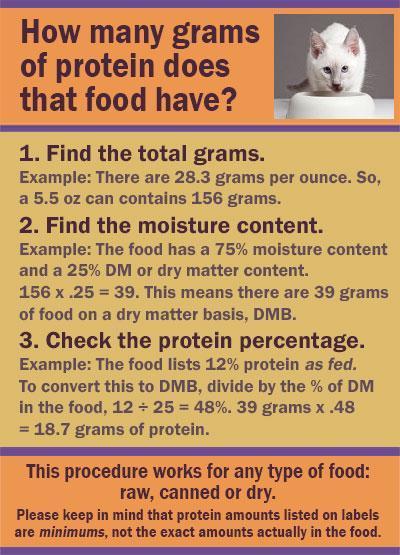
Calculating Protein Grams Per Serving
To find protein grams, multiply the protein percentage by the serving size. For example, if the label says 30% protein and the serving is 100 grams, the protein amount is 30 grams. If the food is wet and contains water, calculate based on dry matter to get accurate protein grams. This helps you know exactly how much protein your cat eats each meal.

Credit: truthaboutpetfood.com
Effects Of Protein On Cat Health
Protein plays a big role in a cat’s health. It helps keep their body strong and working well. Cats need protein every day to stay healthy and active. This section explains how protein affects a cat’s muscles, growth, and overall health.
Maintaining Muscle And Energy
Protein helps build and keep muscles strong. Cats use protein to make energy for playing and moving. Without enough protein, cats may feel weak or tired. Good muscle health helps cats stay active and happy.
Role In Growth And Repair
Kittens need protein to grow big and strong. Protein also fixes body parts that get hurt or worn out. It helps keep a cat’s skin, fur, and organs healthy. Protein supports many important body jobs every day.
Potential Risks Of Excess Protein
Too much protein can cause problems in cats. It can strain their kidneys and liver. Some cats may have trouble digesting extra protein. Feeding the right amount keeps cats safe and healthy.
Adjusting Protein For Life Stages
Protein needs change as cats grow and age. Different life stages demand different amounts of protein. Knowing these needs helps keep cats healthy and active. Protein supports growth, energy, and repair.
Kittens And Growing Cats
Kittens need the most protein. Their bodies grow fast. Protein helps build strong muscles and bones. A diet with 10 to 12 grams of protein daily suits most kittens. High protein supports their energy and brain development.
Adult Cats
Adult cats need less protein than kittens. Their growth slows down. Around 8 to 10 grams of protein per day is enough. Protein helps maintain muscle and overall health. Balanced protein prevents weight gain and health issues.
Senior Cats
Older cats need gentle care with protein. They may need about 7 to 9 grams daily. Too much protein can strain kidneys. High-quality protein supports muscle maintenance and repair. Adjust diet based on health and vet advice.
Special Considerations
Special considerations play a key role in understanding protein needs for cats. Each cat has unique health and dietary needs that affect protein intake. Paying attention to these factors helps keep your cat healthy and happy.
Cats With Health Issues
Cats with health problems may need different protein amounts. Kidney disease often requires lower protein diets. Too much protein can strain damaged kidneys. Cats with diabetes might benefit from higher protein levels to control blood sugar. Always consult a vet before changing protein intake. Tailored diets improve health and quality of life.
Dietary Preferences And Allergies
Some cats have food allergies or sensitivities. Common allergens include beef, dairy, and fish. These cats need special protein sources to avoid reactions. Novel proteins like duck or rabbit can work well. Cats may also prefer wet or dry food. Choosing the right protein type and source matters for picky eaters. Careful selection prevents allergies and ensures proper nutrition.
Frequently Asked Questions
How Much Protein Does An Average Cat Need Daily?
An average cat needs about 50 grams of protein daily for good health.
What Foods Provide The Most Protein For Cats?
Meat, fish, and eggs are top sources of protein for cats.
Can Protein Deficiency Harm A Cat’s Health?
Yes, low protein can cause weight loss and weak muscles in cats.
How Do Cats Digest Protein Differently From Humans?
Cats digest protein better because they have special enzymes for animal protein.
Is Protein Important For A Cat’s Growth And Energy?
Protein is essential for a cat’s muscle growth and daily energy needs.
How Much Protein Is In Typical Cat Food Servings?
Most cat foods contain 30-40 grams of protein per 100 grams serving.
Conclusion
Cats need a certain amount of protein daily to stay healthy. Knowing how many grams they require helps you feed them well. Protein supports their muscles, energy, and overall health. Too little or too much protein can cause problems. Always choose quality food made for cats.
Watch your cat’s weight and behavior to adjust feeding. A balanced diet keeps your cat happy and strong. Protein is key, but balance matters most. Keep your cat’s needs in mind for a long, healthy life.
As an Amazon Associate, I earn from qualifying purchases.