If you need to get a muzzle for your dog, making sure it fits perfectly is key. A muzzle that’s too tight can make your dog uncomfortable, while one that’s too loose won’t do its job properly.
You might be wondering how to measure your dog the right way without any hassle. This guide will walk you through simple steps to get the exact measurements you need. Keep reading, and you’ll learn how to find the perfect muzzle that keeps your dog safe and comfortable.
Choosing The Right Muzzle Type
Choosing the right muzzle type is important for your dog’s safety and comfort. A well-fitted muzzle helps your dog stay calm and secure. It also allows your dog to breathe, pant, and drink water. Picking the correct style and material makes all the difference.
Common Muzzle Styles
There are several muzzle styles to consider. Basket muzzles have an open design. They let dogs breathe and pant easily. Soft muzzles fit snugly and limit biting. They are good for short-term use or vet visits. Nylon muzzles are lightweight and simple. They are best for calm dogs during training. Each style serves a different purpose.
Materials And Comfort
Muzzles come in various materials. Leather muzzles are strong and durable. They soften over time and mold to your dog’s face. Plastic basket muzzles are sturdy and easy to clean. Metal basket muzzles offer the most protection but can be heavy. Nylon muzzles are light but less durable. Soft fabric muzzles provide comfort but limit movement. Choose a material that suits your dog’s needs and skin sensitivity.
Credit: www.cane-corso-dog-breed-store.com
Gathering Your Measuring Tools
Measuring your dog for a muzzle starts with gathering the right tools. Having the correct equipment makes the process smooth and accurate. This step helps you find the best fit for your dog’s comfort and safety.
Essential Tools Needed
Get a soft measuring tape. It wraps easily around your dog’s snout and head. A flexible tape gives precise numbers without hurting your dog.
Use a pen and paper to write down measurements. This keeps your notes clear and organized. Accurate records prevent mistakes later.
Have treats ready. They help keep your dog calm and still during measuring. A calm dog means better results.
Preparing Your Dog
Choose a quiet place with few distractions. Your dog feels safer and focuses better.
Let your dog sniff the measuring tape and tools. This reduces fear and builds trust.
Use treats to reward your dog’s calm behavior. Patience helps your dog stay relaxed during the process.
Measuring Your Dog’s Snout
Measuring your dog’s snout is key to finding the right muzzle size. A proper fit keeps your dog safe and comfortable. Take clear, exact measurements before buying a muzzle. This avoids tightness or looseness that can cause distress.
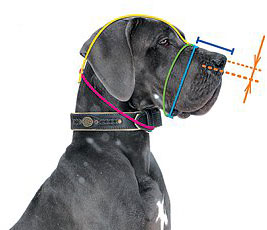
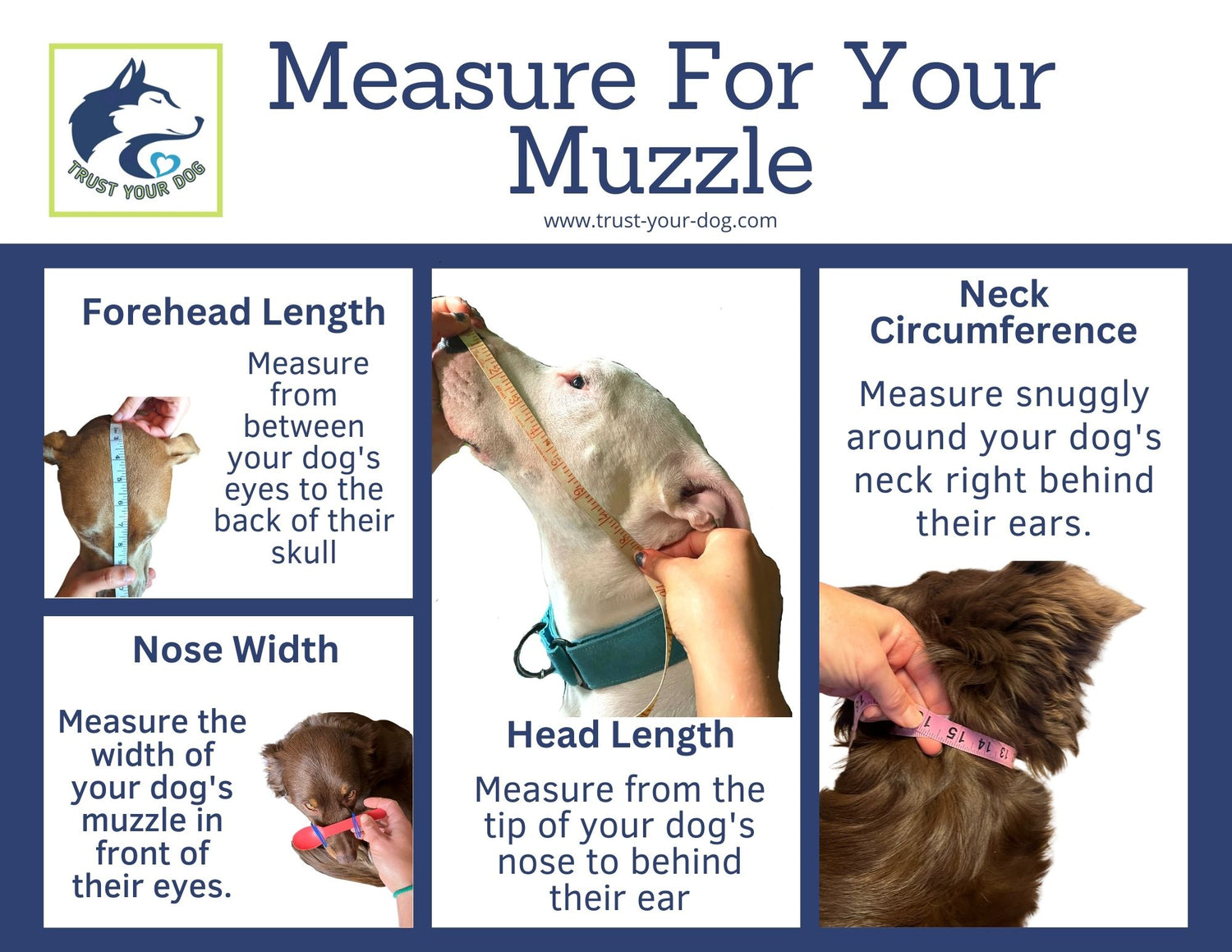
Focus on two main measurements: length and circumference. These help pick a muzzle that fits well and allows your dog to breathe and pant easily.
Measuring Length
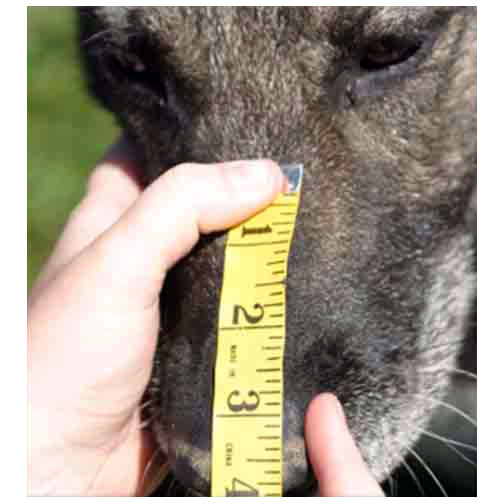
Use a soft tape measure or a piece of string. Start from the tip of your dog’s nose. Measure straight back to the point where the snout meets the face. This is usually just below the eyes.
Hold the tape firmly but gently. Avoid bending the tape around the snout. Write down the length in centimeters or inches. This measurement helps find a muzzle that covers the snout properly.
Measuring Circumference
Wrap the tape measure around the widest part of the snout. This is usually just below the eyes and above the nose. Make sure the tape fits snugly but not too tight.
Note the measurement where the tape meets itself. This is the circumference. It ensures the muzzle will fit around the snout without slipping or squeezing.
Credit: trust-your-dog.com
Measuring Head Width And Neck
Measuring your dog’s head width and neck size is key for a proper muzzle fit. A well-fitted muzzle keeps your dog safe and comfortable. These measurements help you choose the right size without guessing.
Head Width Tips
Use a soft tape measure or string to measure your dog’s head width. Measure the widest part of the head, usually just below the eyes. Keep the tape snug but not tight. Avoid measuring across the ears; they can change size and shape. Double-check your measurement for accuracy. Write down the number in inches or centimeters. This ensures the muzzle will fit comfortably over the snout.
Neck Size Importance
Neck size helps ensure the muzzle strap fits well. Measure around the base of your dog’s neck where the collar usually sits. Keep the tape loose enough to fit two fingers under it. An accurate neck measurement prevents the muzzle from slipping or choking. It also stops the muzzle from being too tight. A good fit means your dog can breathe and pant easily.
Tips For Accurate Measurements
Accurate measurements are key to finding the right muzzle for your dog. Taking precise measurements ensures comfort and safety. Follow these tips for the best results.
Ensuring Dog’s Cooperation
Keep your dog calm and relaxed before measuring. Use treats to get your dog’s attention. Speak softly to soothe your dog. Let your dog sniff the measuring tape first. Avoid rushing the process to prevent stress.
Double-checking Measurements
Measure twice to avoid mistakes. Write down each measurement immediately. Ask someone to help hold the dog still. Compare measurements with the size guide of the muzzle. Small errors can cause discomfort or poor fit.
Credit: leerburg.com
Adjusting For Growth And Breed Differences
Measuring your dog for a muzzle requires careful thought about growth and breed differences. Dogs come in many sizes and shapes, so a one-size-fits-all approach won’t work well. Adjusting the measurements ensures the muzzle fits comfortably and safely. This section explains how to account for your dog’s age and breed when measuring.
Puppies Vs Adult Dogs
Puppies grow quickly. Their heads and snouts change shape as they age. Measure puppies with some room to grow. Choose adjustable muzzles or those made for growing dogs. Adult dogs need precise measurements. Their head size is stable. Measure the snout length and width carefully. A good fit keeps your dog comfortable and safe.
Considering Breed Traits
Different breeds have unique head shapes. Some have long snouts; others have short or wide ones. Measure the length from the nose tip to the base of the head. Also, measure the snout’s width at its widest point. For flat-faced breeds, focus more on width. For long-nosed breeds, length matters more. Knowing these traits helps choose the right muzzle style and size.
Trying On The Muzzle
Trying on the muzzle is a key step after measuring your dog. It helps ensure the muzzle fits well and feels right. This step lets you spot any tight spots or discomfort early. A proper fit keeps your dog safe and calm.
Fitting Checkpoints
Start by placing the muzzle gently on your dog’s snout. Check if it sits snug but not tight. The muzzle should not pinch the nose or eyes. Look for enough space for your dog to open its mouth slightly. The straps must be secure without digging into the skin. Adjust the straps evenly on both sides. Watch your dog’s reaction to the fit. They should not try to pull the muzzle off.
Comfort And Safety
Comfort means your dog can breathe, drink, and pant easily. The muzzle should allow this without slipping. Safety means no sharp edges or loose parts. Check the material for softness against the skin. Make sure the muzzle does not block the dog’s nostrils. Your dog should wear the muzzle for a few minutes. Observe for any signs of stress or discomfort. A good muzzle protects without causing pain.
Maintaining And Caring For Your Muzzle
Taking good care of your dog’s muzzle keeps it safe and comfortable. Regular maintenance helps the muzzle last longer. It also keeps your dog healthy by preventing dirt and bacteria buildup.
Proper cleaning and storage are key parts of caring for the muzzle. Follow simple steps to make sure it stays in great shape.
Cleaning Tips
Clean the muzzle after every use. Use warm water and mild soap. Avoid harsh chemicals that can hurt your dog’s skin. Gently scrub all parts, especially where dirt collects. Rinse well to remove all soap. Let the muzzle dry completely before using it again. This stops mold and bad smells from forming.
Storage Suggestions
Store the muzzle in a cool, dry place. Avoid direct sunlight to prevent damage. Keep it away from moisture to stop rust or mold. Use a clean bag or box to protect it from dust. Do not fold or bend the muzzle to keep its shape. Regular checks help spot any wear or damage early.
Frequently Asked Questions
How Do I Measure My Dog’s Snout For A Muzzle?
Use a soft tape to measure around the widest part of your dog’s snout.
What Tools Are Needed To Measure A Dog For A Muzzle?
A flexible measuring tape and a notepad to record measurements are enough.
How Tight Should A Dog Muzzle Fit?
The muzzle should be snug but allow your dog to pant and breathe easily.
Can I Use A Regular Tape Measure For My Dog?
Yes, but a soft fabric tape is better for accurate and comfortable measuring.
How To Measure Muzzle Length For My Dog?
Measure from the tip of the nose to just below the eyes.
Why Is Accurate Measurement Important For Dog Muzzles?
Proper fit prevents discomfort and ensures the muzzle works safely and effectively.
Conclusion
Measuring your dog for a muzzle is simple and important. Take clear, accurate measurements of the nose and head. A well-fitted muzzle keeps your dog safe and comfortable. Always measure gently and double-check your numbers. This helps avoid mistakes and ensures a proper fit.
A good muzzle helps with training and prevents biting. Remember, patience and care make the process easy. Your dog will thank you for the right fit.
As an Amazon Associate, I earn from qualifying purchases.