Is your dog constantly fixated on your cat, making your home tense and stressful? You’re not alone, and the good news is you can change this behavior.
When a dog won’t stop staring, chasing, or obsessing over a cat, it’s more than just annoying—it can lead to dangerous situations for both pets. Imagine a calm, peaceful home where your dog and cat coexist without constant tension. You’ll discover simple, effective steps to help your dog focus elsewhere and live harmoniously with your feline friend.
Keep reading, because the solution is easier than you think, and your pets—and your sanity—will thank you.
Credit: www.healthypawspetinsurance.com
Why Dogs Fixate On Cats
Dogs often focus on cats for several reasons. Understanding these reasons helps to manage the behavior effectively. Dogs may fixate on cats due to natural instincts, past experiences, or social habits. Recognizing why your dog acts this way is the first step to change.
Instinct And Prey Drive
Dogs have a natural prey drive. This means they want to chase small, fast animals. Cats fit this description perfectly. Even calm dogs can suddenly start chasing cats because of this instinct. It is part of their survival behavior from long ago.
Lack Of Socialization
Dogs that do not meet cats often may be unsure or scared. They may stare or fixate because they do not know how to behave. Early socialization with cats helps dogs learn to stay calm around them. Without this, dogs can become overly focused or excited.
Previous Experiences
Past encounters with cats shape a dog’s behavior. A dog that had negative or exciting moments with cats may fixate more. Good or bad, these memories influence how a dog reacts. Dogs learn from experience and repeat what worked before.

Credit: www.purina.co.uk
Signs Of Fixation To Watch For
Dogs can show many signs when they fixate on a cat. Recognizing these signs early helps you manage your dog’s behavior. Watch closely for specific actions that show your dog is too focused on the cat. This focus can cause problems if not addressed quickly.
Staring And Alert Posture
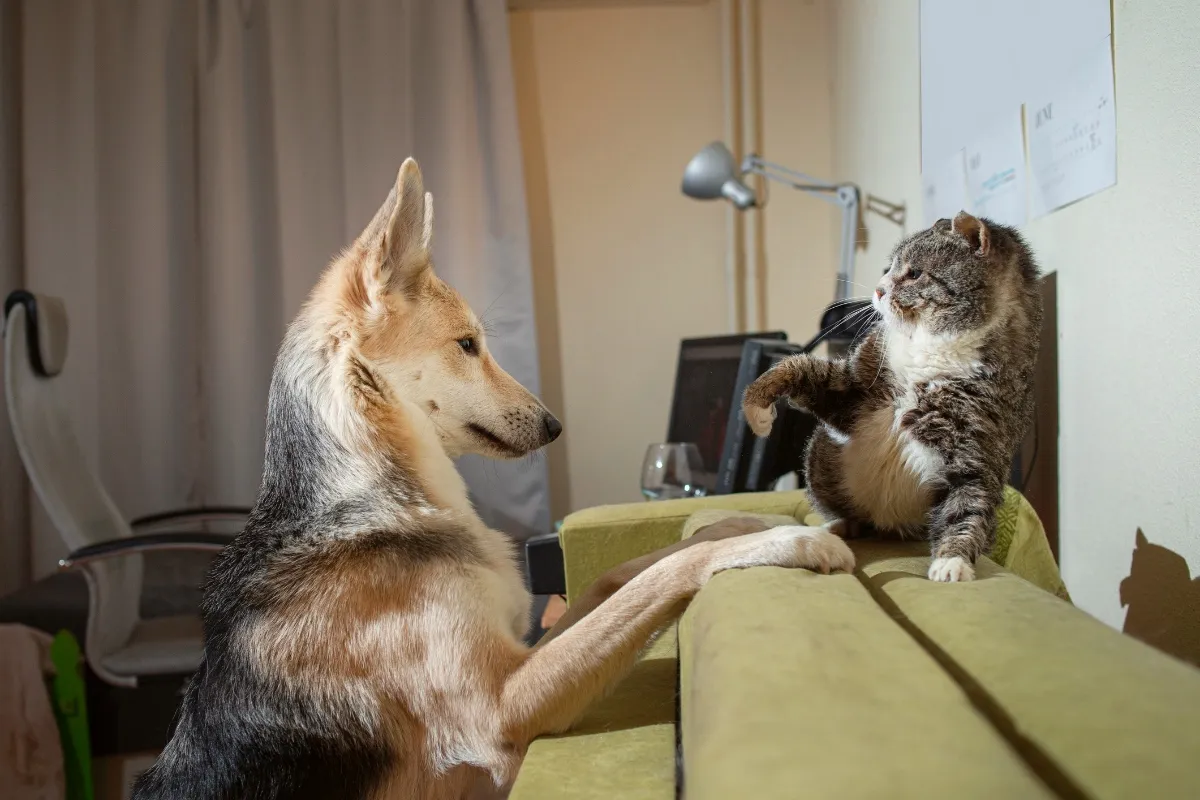
A fixated dog often stares at the cat without blinking. Their body becomes stiff and alert. Ears point forward, and the tail may stand straight up. This posture shows high focus and readiness to act. It means the dog is very interested in the cat.
Chasing Behavior
Chasing is a clear sign of fixation. The dog may run after the cat when it moves. This action shows the dog wants to catch or follow the cat. Chasing can cause stress or harm to both animals. It is important to stop this behavior early.
Excessive Barking
Dogs often bark a lot when fixated on a cat. The barking can be loud and repeated. This noise shows excitement or frustration. Excessive barking can disturb everyone in the home. It also increases tension between the dog and cat.
Preparing For Training
Preparing for training helps your dog learn better and stay calm. It creates a good start for teaching your dog to stop fixating on the cat. Careful preparation makes the training safe and effective. This step is important before you begin any behavior work.
Safe Environment Setup
Choose a quiet room with no distractions. Remove toys or items that may excite your dog. Use baby gates or leashes to keep the dog and cat apart. This prevents sudden chasing or fights during training. Safety keeps both pets calm and secure.
Assessing Your Dog’s Temperament
Watch how your dog acts near the cat. Notice if your dog is calm, curious, or aggressive. Knowing your dog’s feelings helps you plan the right training steps. Some dogs need slow, gentle introductions. Others can handle closer contact. Adjust training to match your dog’s mood and energy.
Gathering Training Tools
Prepare treats to reward good behavior. Use a leash to control your dog easily. Have a clicker if you use clicker training. Bring toys to distract your dog when needed. Keep water and a calm voice ready. Good tools help training go smoothly and keep your dog focused.
Training Techniques To Redirect Attention
Training your dog to stop fixating on a cat takes patience and clear steps. Use focused training techniques to guide your dog’s attention elsewhere. These methods help reduce stress for both pets and build better behavior.
Redirecting your dog’s focus improves control and safety in your home. You teach your dog to listen and respond to you instead of chasing the cat. Training involves simple commands, rewards, and distractions.
Teaching Focus Commands
Start by teaching your dog a simple focus command like “look” or “watch me.” Hold a treat near your face and say the command. When your dog looks at you, give the treat immediately. Repeat this often in quiet settings first.
Practice this command near the cat but at a distance. Reward your dog for looking at you instead of the cat. Gradually decrease the distance to the cat while keeping your dog’s attention on you.
Using Positive Reinforcement
Reward good behavior with treats, praise, or playtime. Positive reinforcement teaches your dog what you want. Ignore unwanted focus on the cat to avoid encouraging it.
Give treats right when your dog shifts attention away from the cat. Use a happy voice to praise your dog’s good choices. This motivates your dog to repeat the behavior.
Distraction Methods
Use toys or games to distract your dog from the cat. Throw a ball or offer a chew toy when your dog starts fixating. This helps redirect energy to fun activities.
Change the environment by moving to another room or using barriers. Sometimes, a quick change helps your dog reset focus. Keep distractions ready to prevent staring or chasing.
Controlled Introductions Between Dog And Cat
Introducing a dog and a cat requires care and control. Controlled introductions help reduce stress and prevent unwanted behavior. These steps guide you in creating a calm and safe meeting for both pets. Patience and consistency are key to success.
Leashed Meetings
Keep your dog on a leash during the first meetings. This gives you control over the dog’s movements. It stops sudden lunges or chasing attempts. Let the cat explore freely but stay near to watch. Short sessions work best to avoid overwhelming either pet.
Gradual Exposure
Start with brief interactions in the same room. Allow both pets to see and sniff each other from a distance. Slowly reduce the space between them over several days. Avoid forcing contact; let them approach in their own time. This builds trust and reduces fear.
Monitoring Body Language
Watch your dog’s posture and tail position closely. Signs like stiff legs or intense staring show fixation. Look for cat signals too, such as hissing or raised fur. Stop the meeting if either pet shows stress. Calm and relaxed body language means progress.
Managing Fixation Outside Training Sessions
Managing your dog’s fixation on a cat outside training sessions is key to lasting change. Dogs learn best when you stay consistent throughout the day. This helps your dog feel calm and understand what is expected.
Keep your dog busy and set clear rules. Avoid situations that make your dog overly excited about the cat. These steps reduce stress and help your dog stay focused on you.
Exercise And Mental Stimulation
Regular exercise helps burn extra energy. A tired dog is less likely to fixate on the cat. Walks, runs, and playtime keep your dog physically fit. Puzzle toys and training games boost your dog’s mind. Mental work tires your dog just as much as physical activity.
Give your dog tasks to solve. This keeps their attention away from the cat. A busy dog is a happy dog.
Consistent Boundaries
Set clear limits about where your dog can go. Use gates or leashes to control access. Teach your dog to stay calm around the cat’s space. Always reward calm behavior with treats or praise. Consistency helps your dog learn what is safe and allowed.
Make sure everyone in the home follows the same rules. Mixed messages confuse your dog and slow progress.
Avoiding Triggers
Notice what triggers your dog’s fixation. It could be the cat moving quickly or a certain room. Keep your dog away from these triggers as much as possible. Use barriers or change routines to reduce encounters.
Reducing triggers lowers stress for both pets. This creates a peaceful environment and fewer fixations.
When To Seek Professional Help
Knowing when to seek professional help is important if your dog fixates on your cat. Some behaviors need expert care to keep both pets safe. Professionals can guide you with effective methods to reduce your dog’s fixation. Early help prevents problems from getting worse.
Signs Of Aggression
Watch for growling, barking, or lunging at the cat. Constant chasing or stiff body posture shows stress. Snapping or biting signals serious risk. These signs mean you need help soon. Do not wait until someone gets hurt.
Behavioral Specialists
These experts understand animal behavior deeply. They assess your dog’s actions and triggers. Specialists create plans to change bad habits. They teach you how to manage your dog’s focus. Their advice helps keep peace at home.
Training Classes
Group or private classes improve your dog’s control. Trainers teach commands to redirect attention away from the cat. Classes build good habits and reduce stress. Consistent practice makes lasting change possible. Training helps your dog behave better around cats.

Credit: lightenupdogtraining.co.uk
Frequently Asked Questions
How Can I Stop My Dog From Chasing My Cat?
Train your dog with commands like “leave it” and reward calm behavior around your cat.
Why Does My Dog Fixate On The Cat?
Dogs may fixate due to prey drive, curiosity, or lack of training.
What Training Methods Reduce Dog’s Focus On Cats?
Use positive reinforcement, distraction, and controlled introductions to change your dog’s focus.
Can Leash Training Help Control Dog’s Cat Fixation?
Yes, leashing helps manage your dog’s behavior and prevents sudden chasing.
How To Keep Dogs And Cats Safe Together?
Supervise interactions, provide separate spaces, and train your dog to stay calm.
When Should I Seek Professional Help For Dog’s Fixation?
Seek help if your dog shows aggressive or uncontrollable behavior around cats.
Conclusion
Stopping a dog from fixating on a cat takes patience and care. Train your dog with clear commands and rewards. Keep both pets safe by supervising their time together. Give your dog enough exercise to reduce excess energy. Slowly introduce the cat, allowing your dog to adjust.
Stay calm and consistent to build trust between them. Over time, your dog will learn to stay calm around the cat. Remember, small steps lead to better behavior and a peaceful home.
As an Amazon Associate, I earn from qualifying purchases.